皆さま、こんにちは。
2025 Miss SAKE 秋田の嶋宮里紗です。
このたび、2025年9月1日(月)、初代Miss SAKE 森田真衣さんのご同行のもと、タイ・バンコクにある「グランド・パレス」を訪問いたしましたので、ご報告いたします。
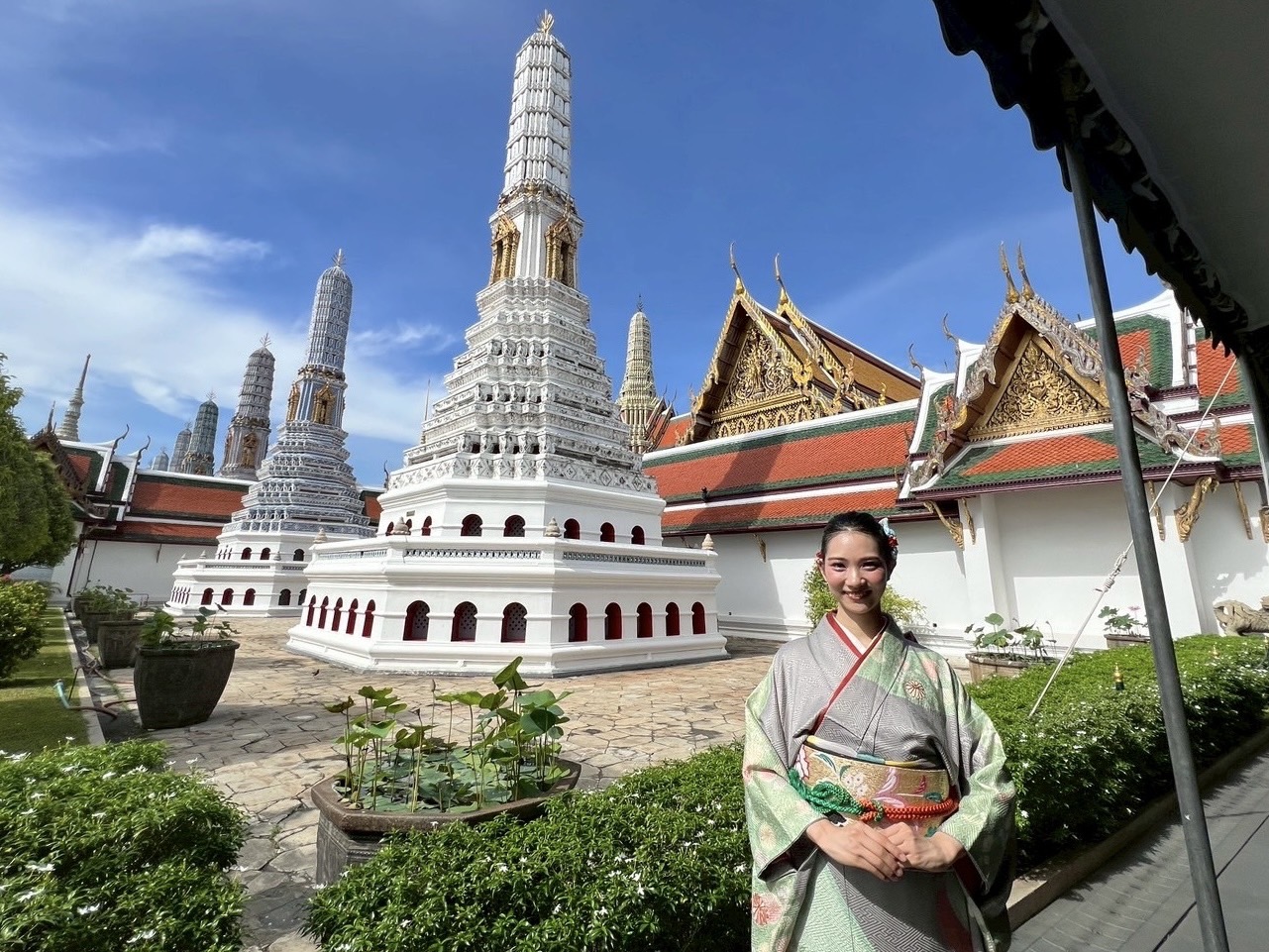
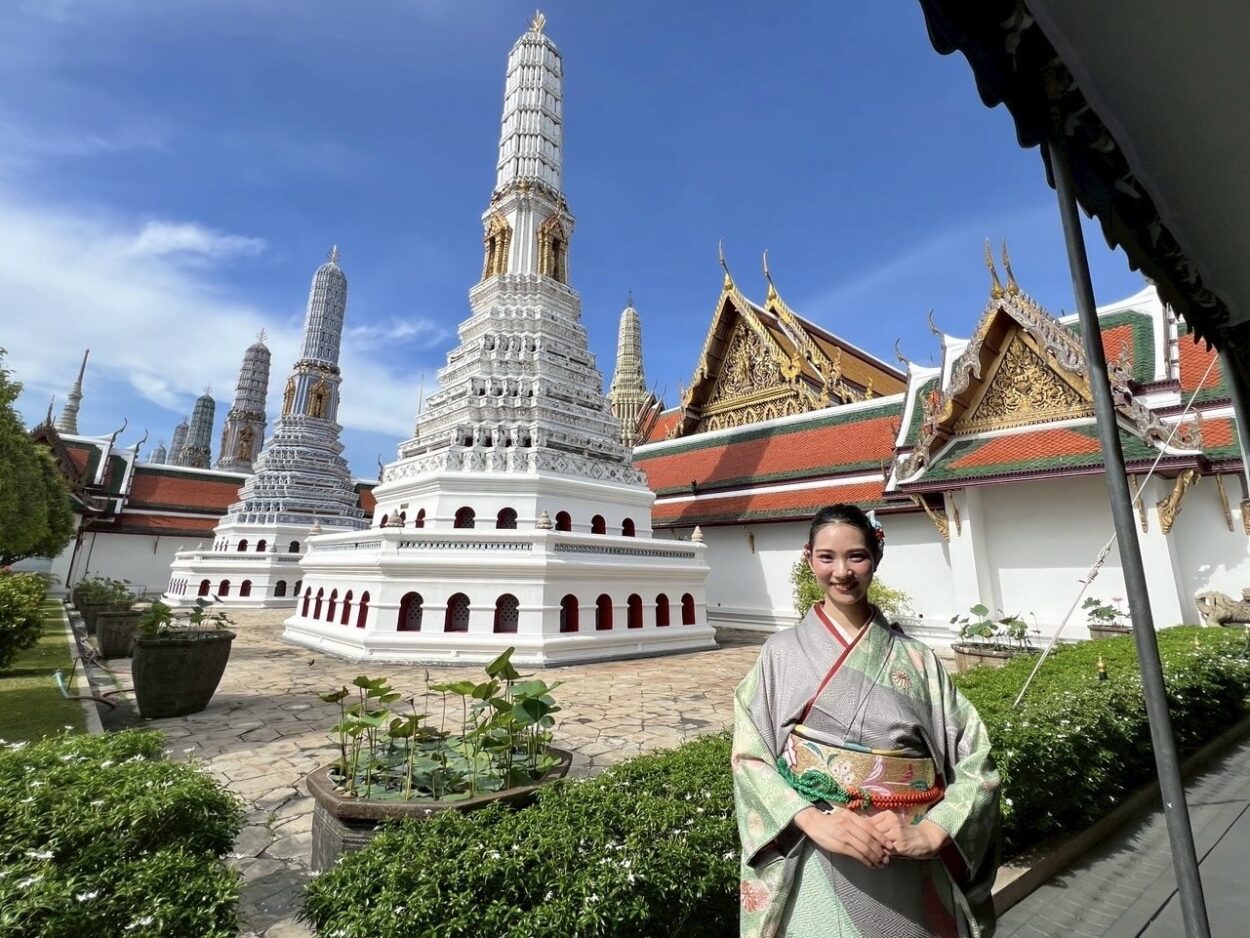
タイ・バンコクの「グランド・パレス」は、タイ王国を象徴する建築であり、歴史的・文化的に非常に重要な場所です。ラーマ1世の命により1782年5月6日に建設が始まり、その面積は約218,400平方メートル(約21.8ヘクタール)にも及びます。広大な敷地には行政機関や王室の事務所が配置される「外庭」エリアがあり、わずか数時間で見学するには到底足りない規模でした。
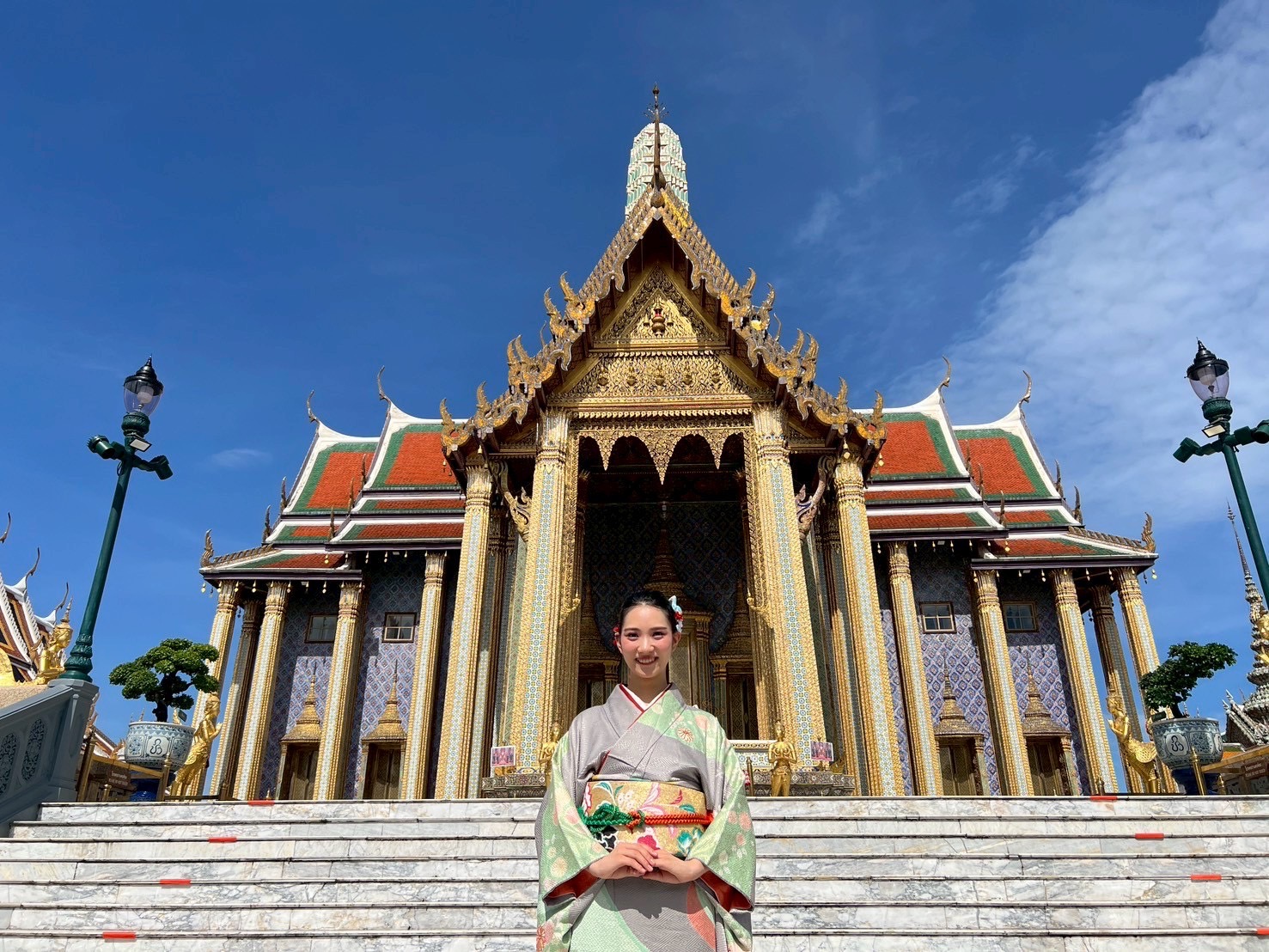
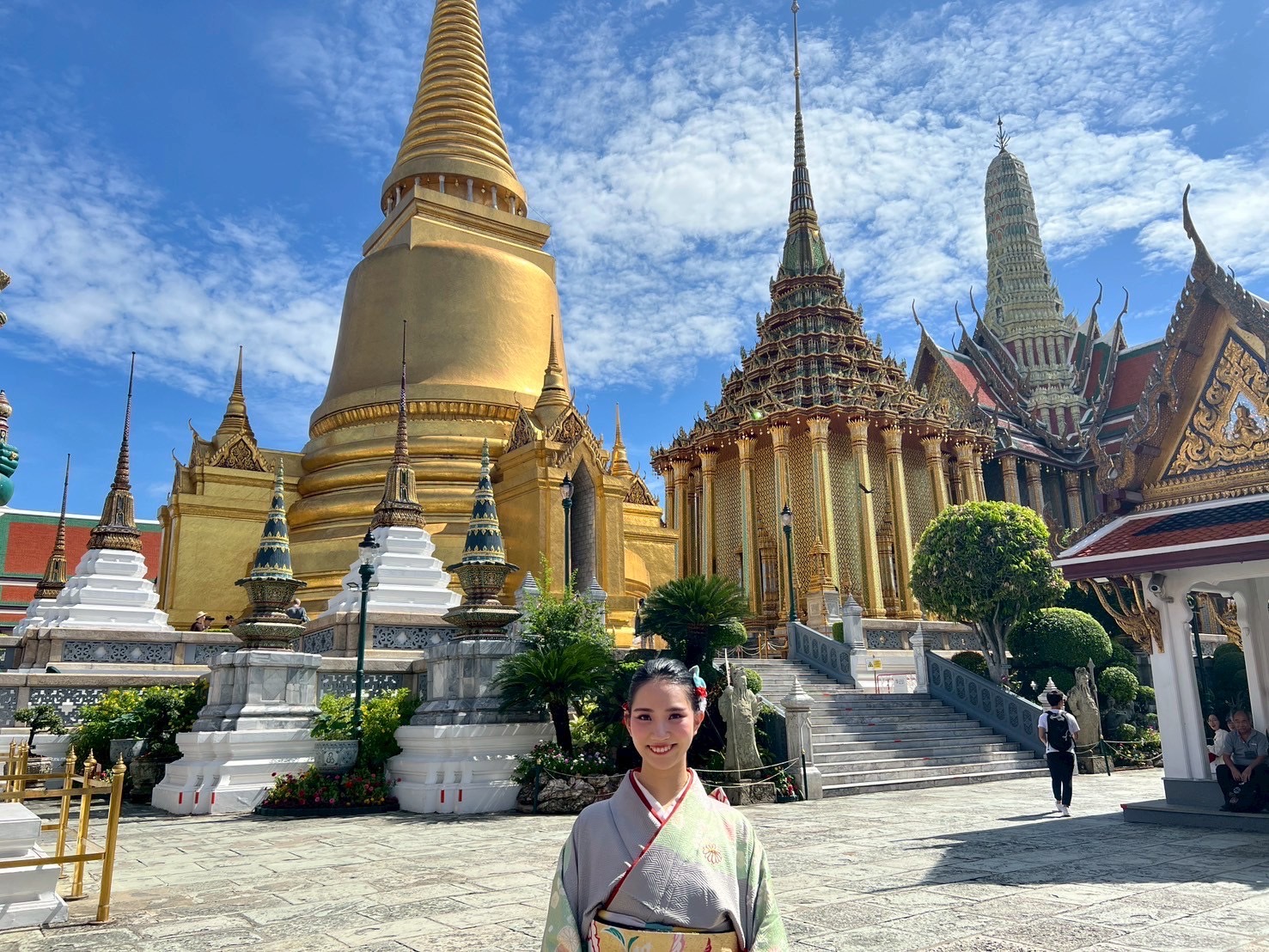
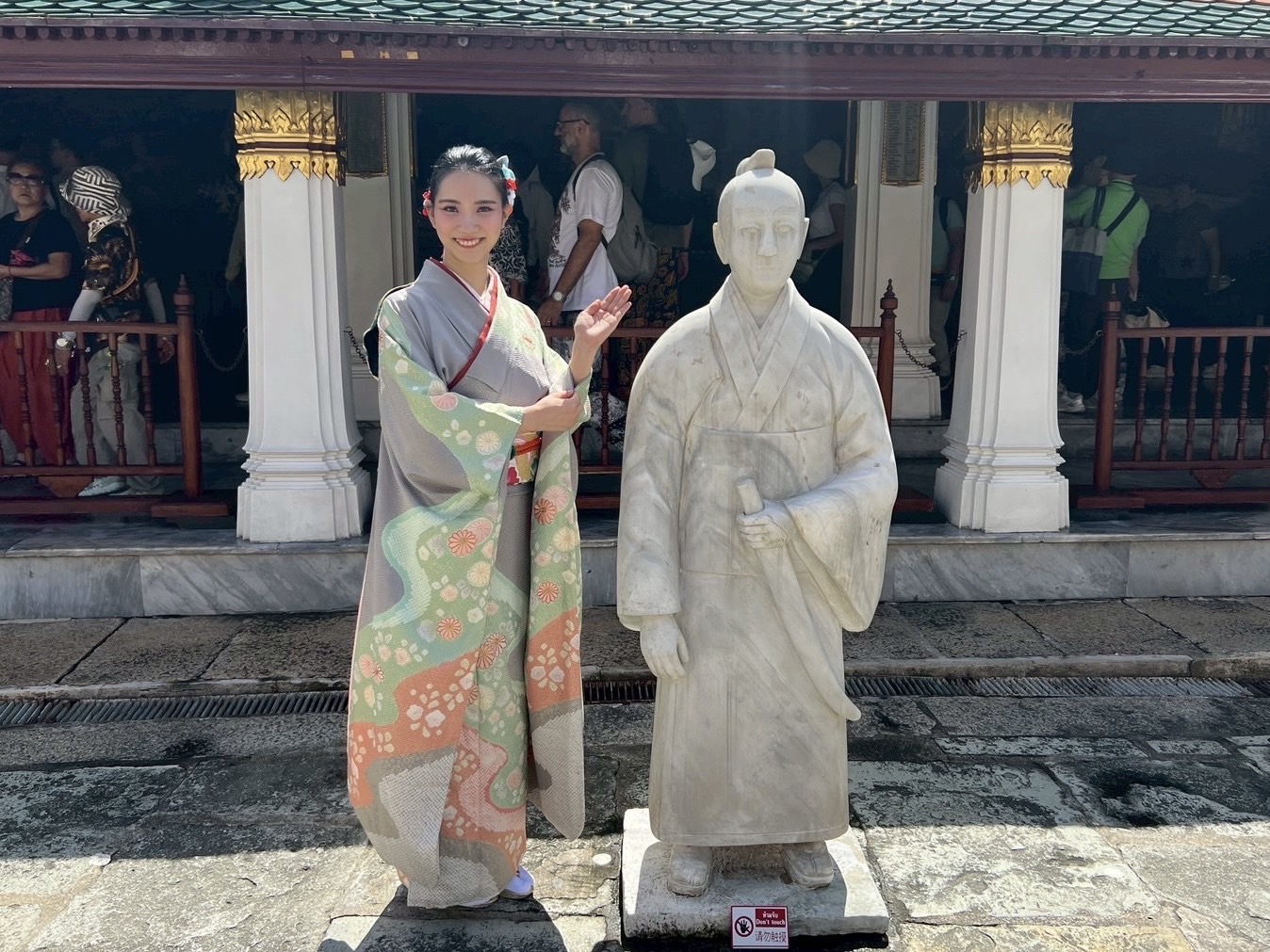
特に印象的だったのは、「グランド・パレス」が単にタイの文化を示すだけでなく、多様な国の歴史・文化・宗教が融合した場所であるという点です。たとえば、カンボジアにある世界最大級の宗教建築「アンコールワット」の縮尺再現建築や、ヨーロッパのルネサンス様式とタイ伝統様式が融合した「チャクリー・マハー・プラサート宮殿」などが見られます。このような多様な建築様式の共存から、タイは「受容の国」であることが垣間見えました。また、入場口の工事中に発掘された、侍や着物姿の人物の石像も飾られており、日本の歴史・文化も受容されていることを感じ、大変嬉しく思いました。

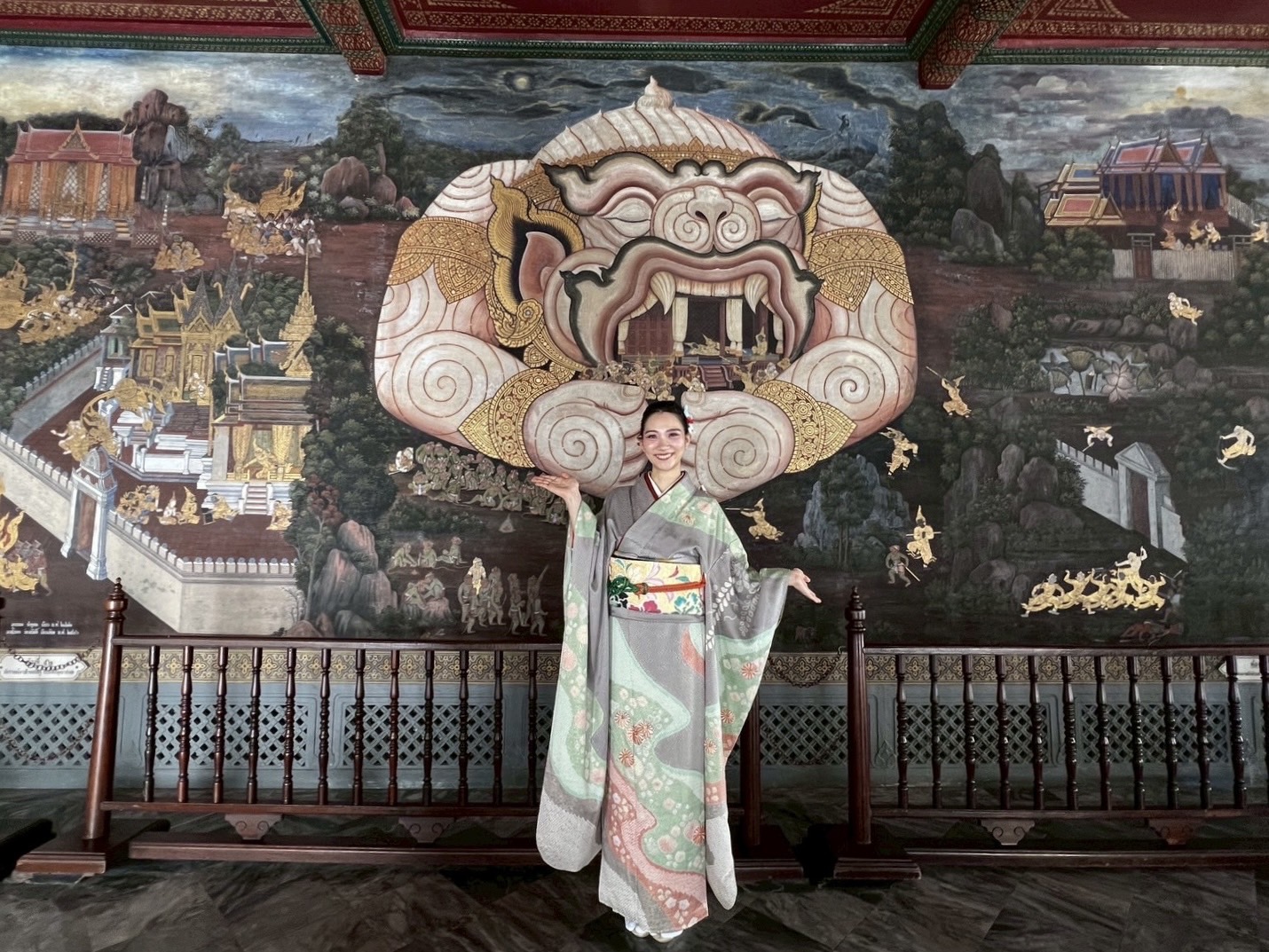
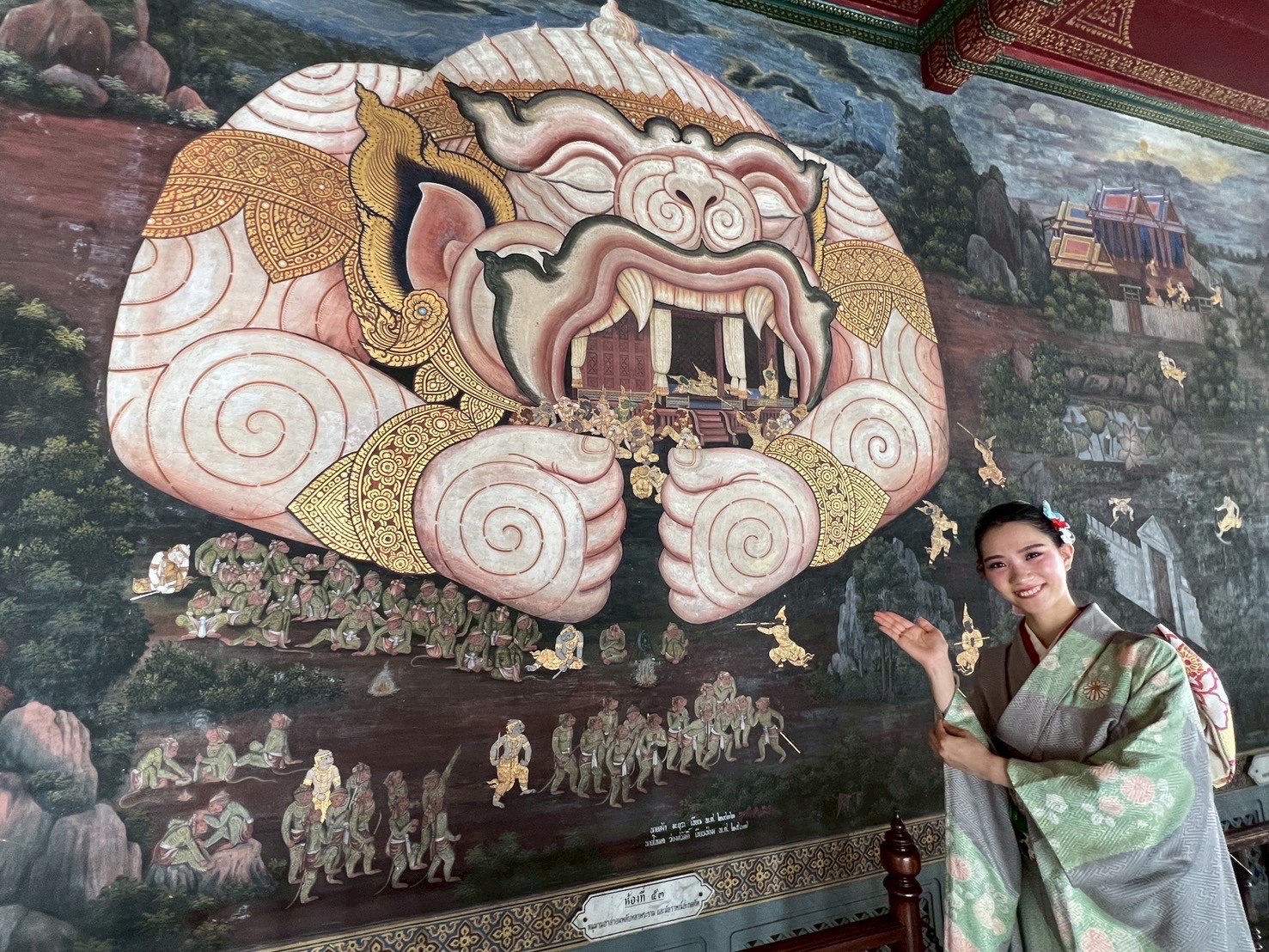
特に印象的だったのは、回廊に描かれた「ラーマキエン」の壁画です。この壁画は、インドの叙事詩「ラーマーヤナ」をもとにタイで再構成された物語で、猿と魔物(デーモン)が戦う場面が印象的に表現されています。
物語では、魔王に囚われた王妃を救うため、主人公ラーマ王子が猿たちと共に立ち向かいます。小さな存在である猿たちは、正面から力で挑むのではなく、知恵と団結力、忠誠心をもって悪を退けていきます。このお話を拝聴し、たとえ小さな存在であっても、力を合わせ知恵を働かせれば大きな困難に立ち向かえることを改めて認識しました。私自身も、仲間や周囲の力を頼りながら活動に取り組み、共に困難を乗り越えていく姿勢を大切にしたいと感じました。
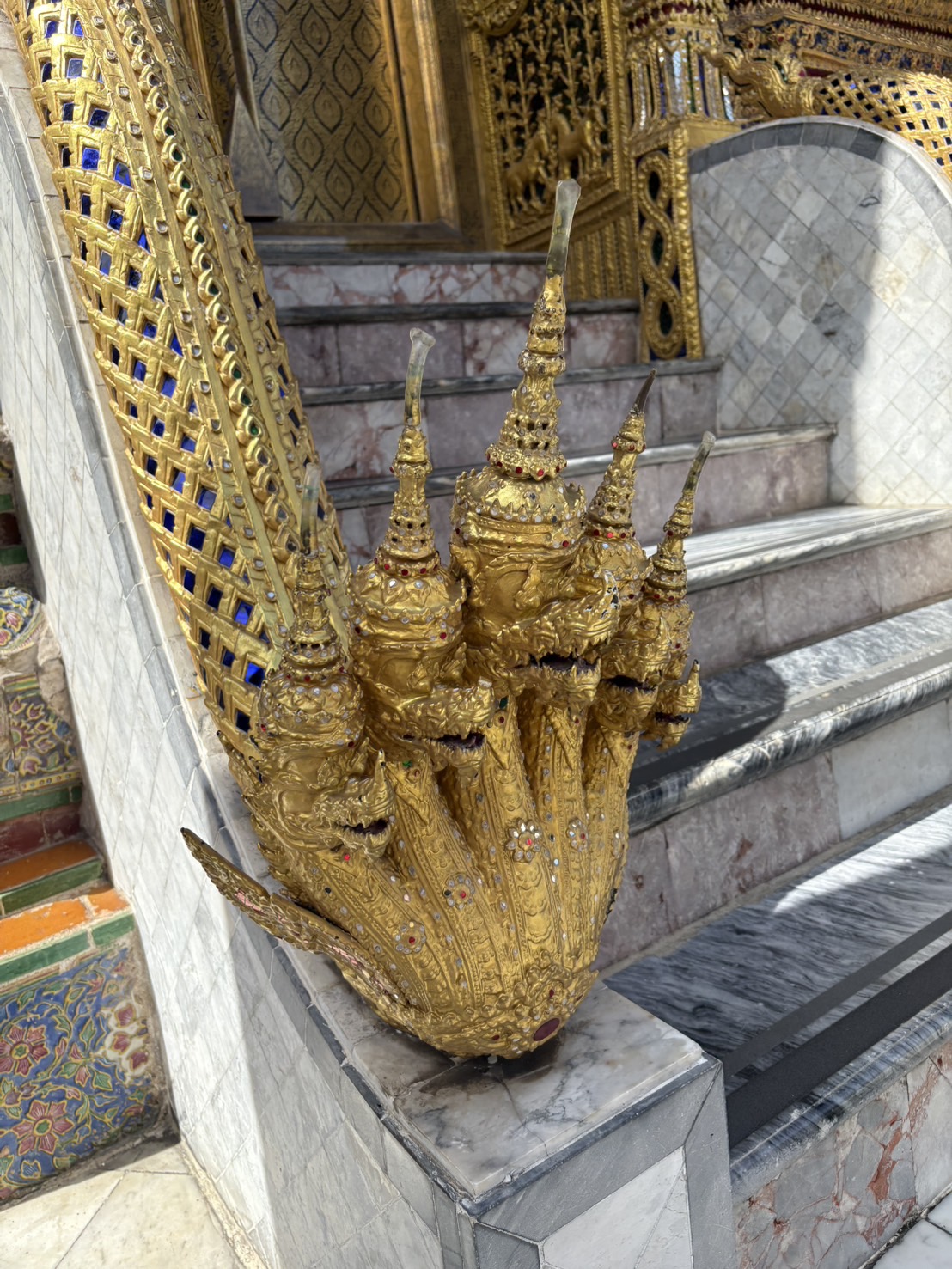
また、蛇神ナーガの像も非常に印象的でした。蛇神ナーガの5つの頭は、在家の信者が守るべき基本的な五戒と結びつけて説かれています。そのうちの一つには「不飲酒戒」があり、日常生活でアルコールを慎むことが戒めとして示されています。このことから、タイでアルコール規制が厳しい背景には、歴史的・宗教的な側面があることが分かります。今後、日本酒の魅力をタイの皆様に伝える際には、単なるアルコール飲料としてではなく、日本文化の一部として伝えることの重要性を改めて感じました。
さらに、グランド・パレス内のエメラルド寺院(ワット・プラケオ)にお邪魔し、翡翠でつくられたエメラルド仏を拝見することができました。エメラルド仏はタイの守護仏として王権と深く結びついており、年に3回、タイの「夏・雨季・冬」に合わせて王が衣を着せ替える国家儀礼が行われます。伺った9月は雨季にあたり、右肩のみが衣で覆われた装いでした。
エメラルド仏の前では、仏・法・僧への敬意を表す所作として、床にひざまずき、両手を合わせたまま三度頭を地面につける「ワイ」を行いました。タイ国で最も神聖な寺院の一つであるエメラルド寺院で、このように間近でエメラルド仏を拝見できたことは、一生忘れられない貴重な経験となりました。

今回の「グランド・パレス」訪問を通じて、タイで大切にされている文化への理解や受容の心、歴史的に重んじられる価値観を肌で感じることができました。このような貴重な機会をいただけたことに、心より感謝申し上げます。誠にありがとうございました。
※全体が寺院のため、文化を尊重しサッシュの着用は遠慮いたしました。
2025 Miss SAKE 秋田
嶋宮里紗
Hello everyone,
I am Risa Shimamiya, 2025 Miss SAKE Akita.
On Monday, September 1, 2025, accompanied by the first Miss SAKE, Mai Morita, I had the invaluable opportunity to visit the Grand Palace in Bangkok, Thailand. I am pleased to report on this experience.
The Grand Palace in Bangkok is an iconic symbol of Thailand and holds immense historical and cultural significance. Construction began on May 6, 1782, under the orders of King Rama I, and the palace complex spans approximately 218,400 square meters (about 21.8 hectares). The vast grounds include the Outer Court, where administrative offices and royal chambers are located, and even a one-hour visit is far from sufficient to explore its entirety.
What impressed me most was that the Grand Palace is not only a representation of Thai culture but also a place where diverse histories, cultures, and religions converge. For example, there is a scale reproduction of Angkor Wat, one of the world’s largest religious structures located in Cambodia, as well as the Chakri Maha Prasat Palace, which combines European Renaissance and traditional Thai architectural styles. The coexistence of these diverse styles gave me a sense of Thailand as a nation of openness and acceptance. Additionally, stone statues of samurai and figures in kimono, discovered during construction three years ago and displayed at the entrance, further reflected Thailand’s acceptance of Japanese history and culture, which I found particularly delightful.
The wall paintings of the Ramakien in the palace corridors left the deepest impression. These murals are based on the Indian epic Ramayana, reinterpreted in the Thai context, and vividly depict scenes of battles between monkeys and demons.
In the story, Prince Rama confronts demons alongside the monkeys to rescue his abducted queen. Although the monkeys are small and seemingly powerless, they defeat evil through wisdom, teamwork, and loyalty rather than sheer force. Listening to this story reminded me that even those who are small or seemingly weak can overcome great challenges when they work together and apply their intelligence. I personally felt inspired to approach my activities with a spirit of collaboration, relying on the strength of my colleagues and supporters to overcome difficulties together.
The statue of the serpent deity, Nāga, was also particularly striking. The five heads of Nāga are traditionally associated with the Five Precepts that lay Buddhists are encouraged to follow. One of these precepts, abstaining from alcohol, illustrates how daily conduct and ethical practice are guided by spiritual principles. This reinforced my understanding that Thailand’s strict regulations regarding alcohol have historical and religious foundations. Moving forward, when promoting the appeal of Japanese sake in Thailand, I recognize the importance of presenting it not merely as an alcoholic beverage, but as a part of Japanese culture that can be appreciated and respected by the Thai people.
Furthermore,I had the chance to visit the Emerald Temple (Wat Phra Kaew) within the Grand Palace and viewing the Emerald Buddha up close. The Emerald Buddha, made of jade, is deeply connected to the monarchy as Thailand’s guardian deity. The statue’s robes are changed by the king three times a year to correspond with the Thai seasons of summer, rainy season, and winter. During our visit in September, corresponding to the rainy season, only the right shoulder was covered by its robe.
In front of the Emerald Buddha, I performed the wai, a gesture of respect involving kneeling with hands together and touching the head to the ground three times, symbolizing homage to the Buddha, the Dharma, and the Sangha. Being able to witness the Emerald Buddha in person at one of Thailand’s most sacred temples was an unforgettable and deeply meaningful experience.
Through this visit to the Grand Palace, I was able to gain a deeper understanding of Thai culture, the spirit of acceptance, and the values historically revered by the nation. I am truly grateful for this precious opportunity. Thank you very much.
※Since the whole site is a temple, I respectfully chose not to wear the sash in consideration of the culture.
Risa Shimamiya
2025 Miss SAKE Akita