Hello everyone, this is Chisato Tateno, 2025 Miss SAKE Japan.
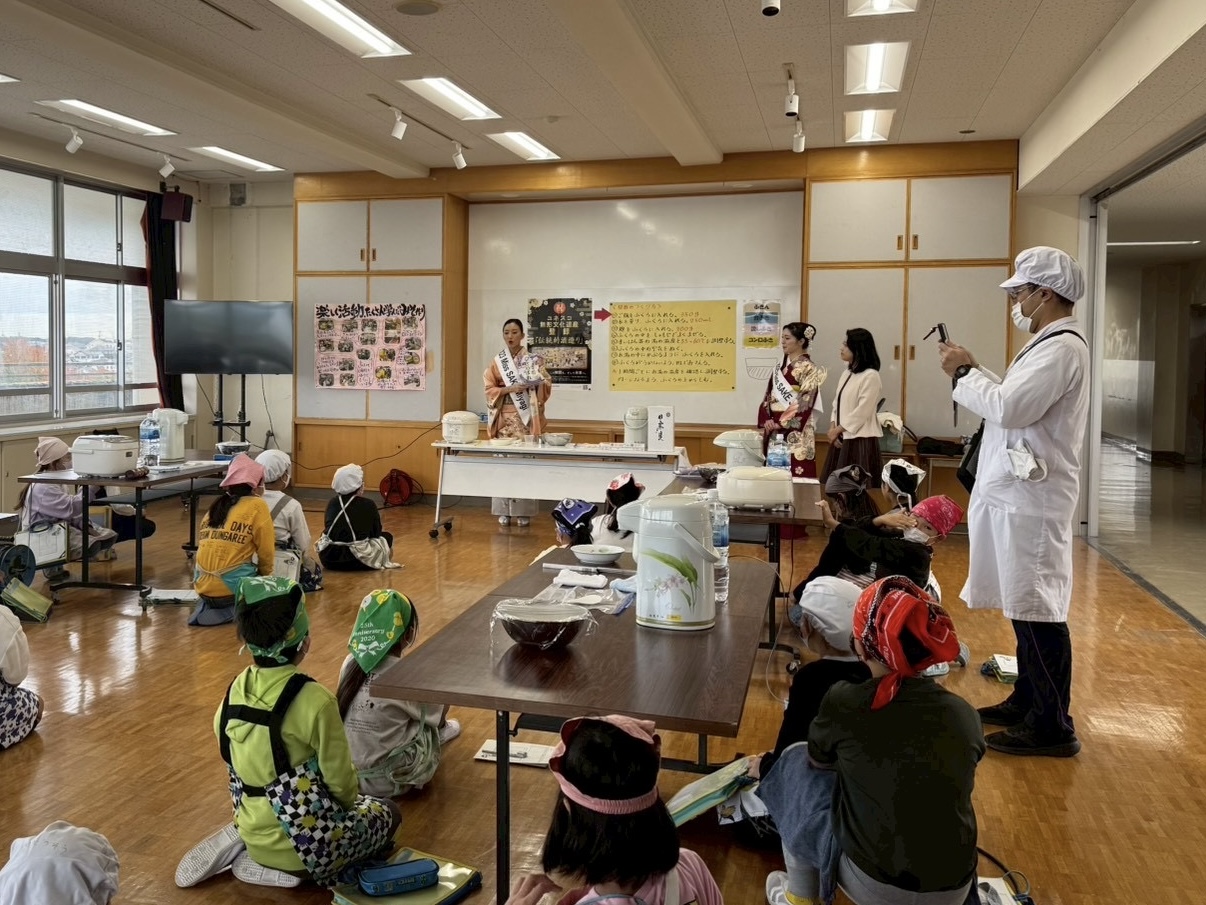
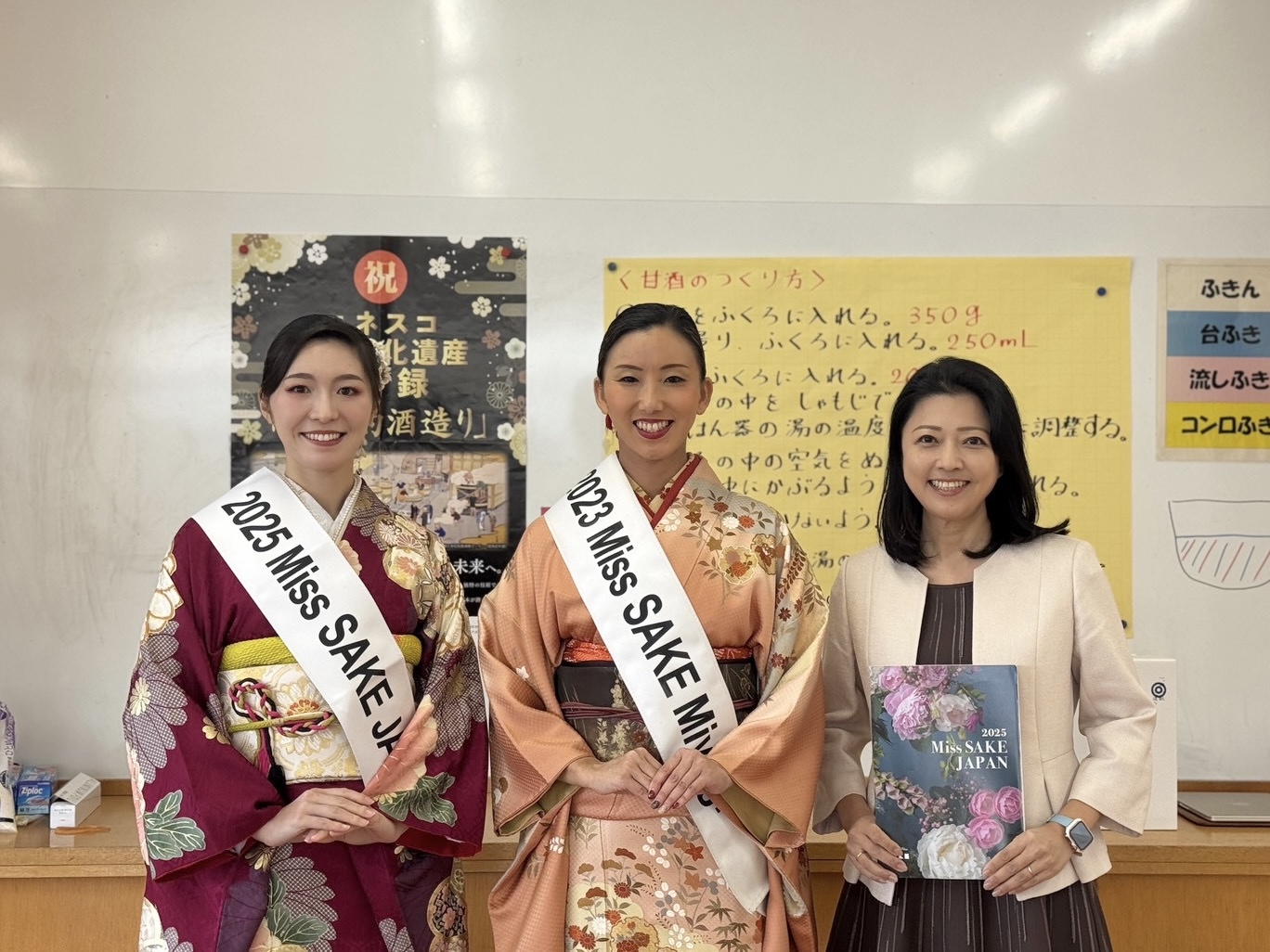
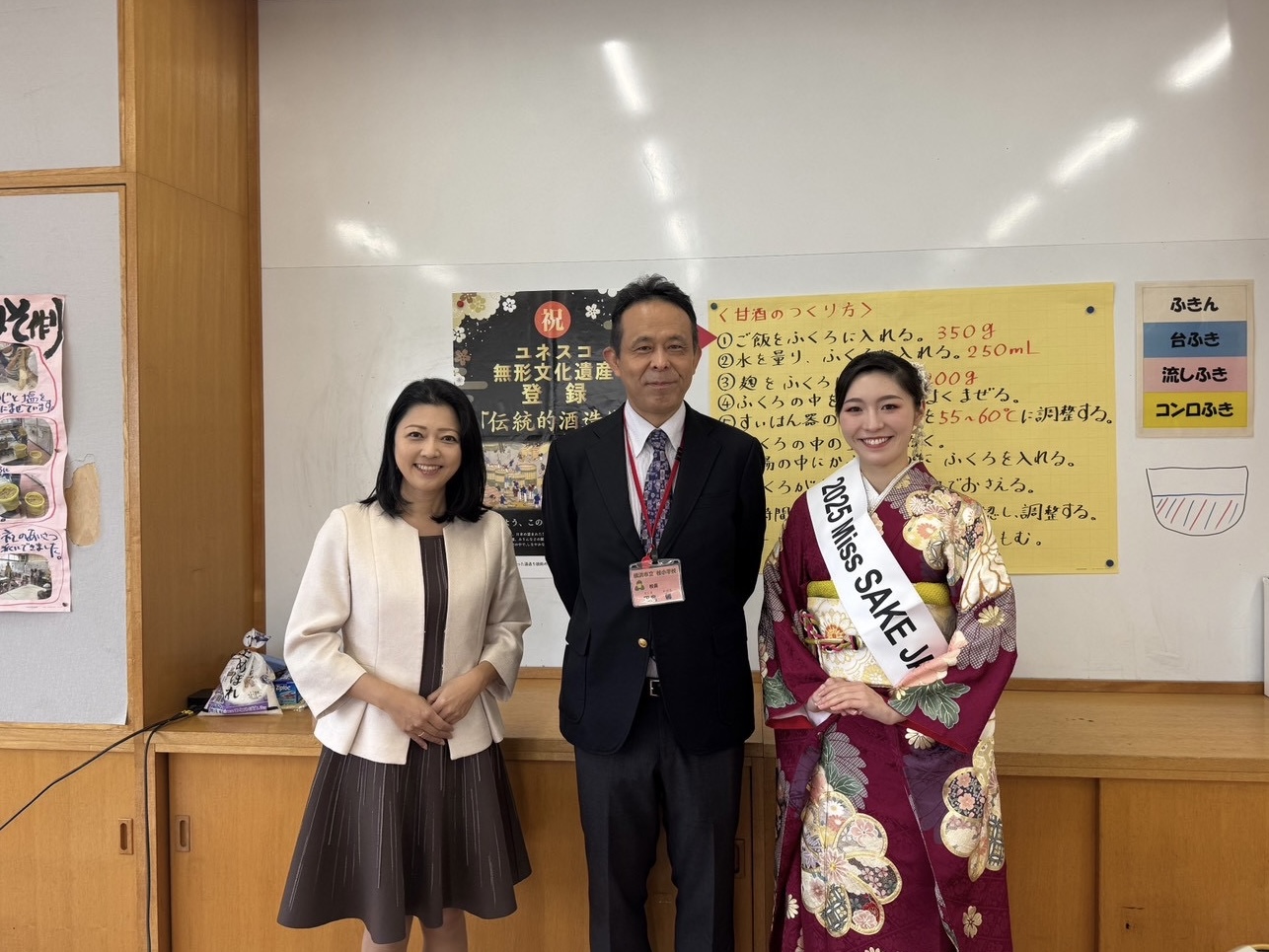
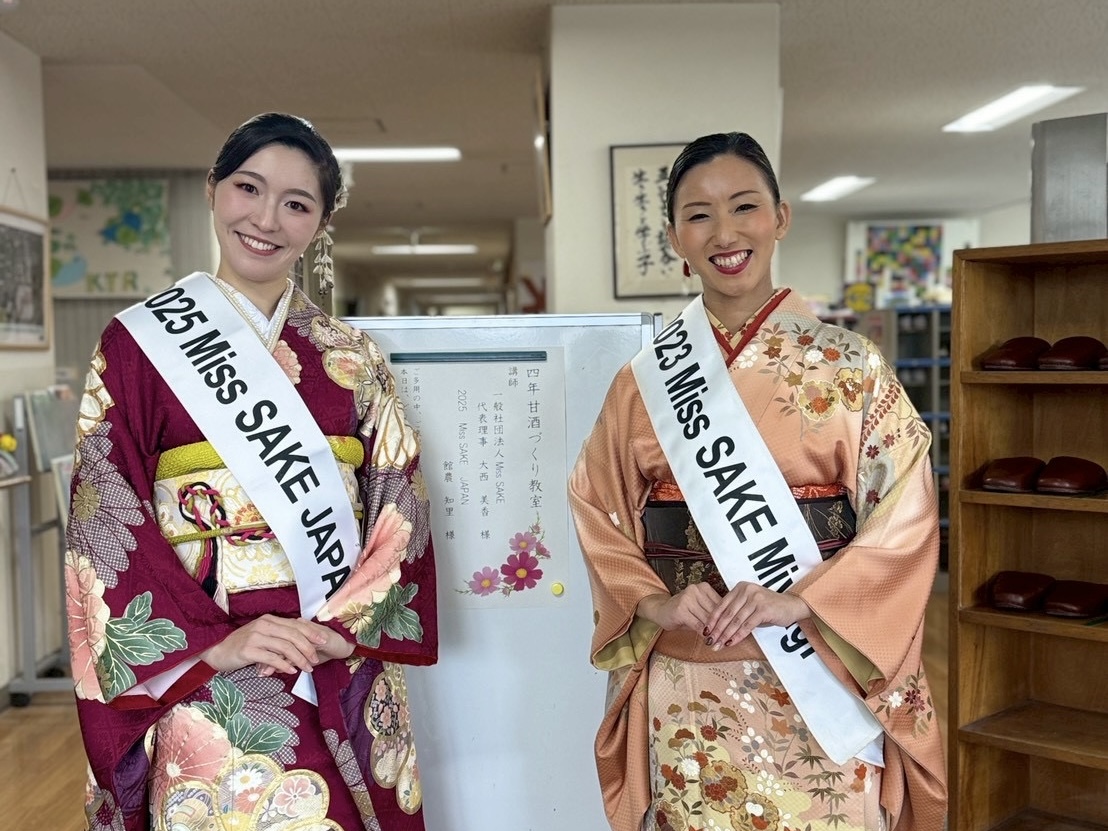
On Tuesday, November 11, I visited an elementary school in Yokohama and joined a “Amazake Making Workshop” held in a 4th-grade class taught by Mizuho Chida, 2023 Miss SAKE Miyagi. As Miss SAKE, I assisted with the workshop and also gave a presentation about koji culture and the Miss SAKE program.
Making, Smelling, and Tasting
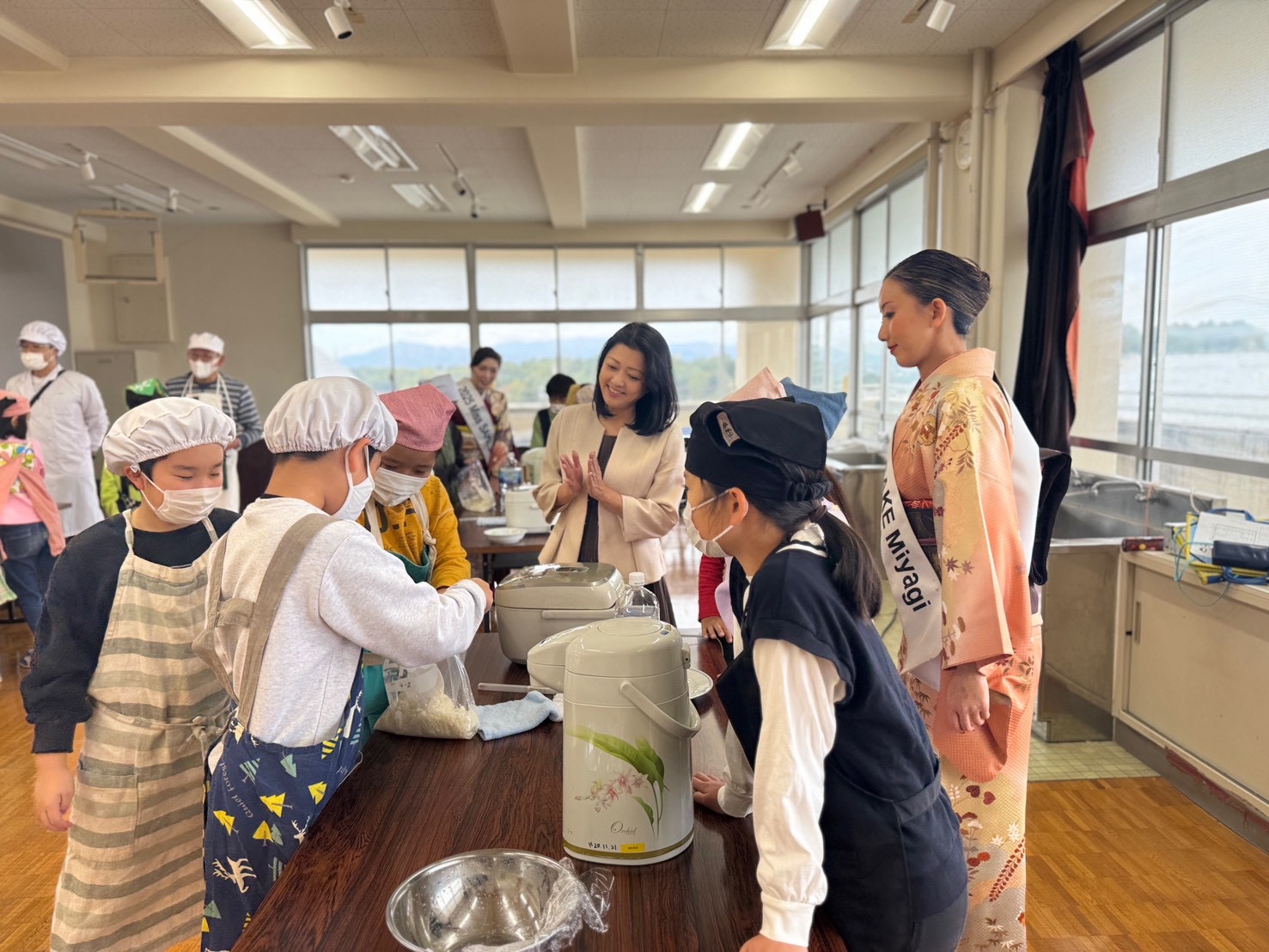
The class began with Ms. Chida’s explanation on “How to Make Amazake.” The students had previously participated in a handmade miso workshop in September, which meant they were already familiar with koji and the power of fermentation. Their eyes sparkled as they listened attentively to the steps of amazake making.
The rice koji used in this workshop was fresh, specially delivered from Hirako Sake Brewery in Ishinomaki, Miyagi—known for its signature label Hitakami—which is run by Ms. Chida’s relatives.
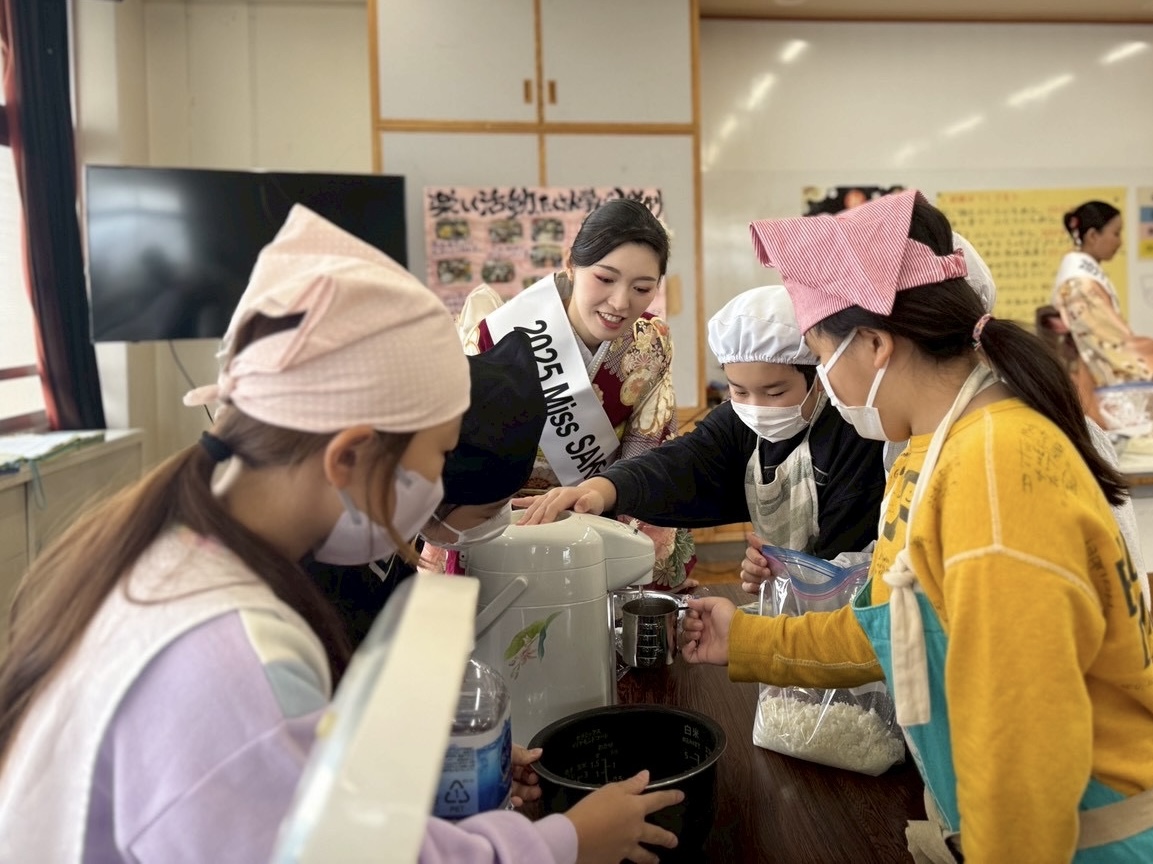
When the students smelled the koji, many commented that it was a fragrance they had never experienced before. Some described it as “sweet, like pancakes,” while others said it smelled like “a mix of miso, soy sauce, and mirin.” Their vivid reactions made it a meaningful moment to explore the depth of koji. After that, each group proceeded with the amazake-making steps, working earnestly according to their assigned roles.
Through the hands-on experience—smelling, tasting, and creating—students learned the joy of fermentation and the important connection between food and culture.

Please try making it at home as well!
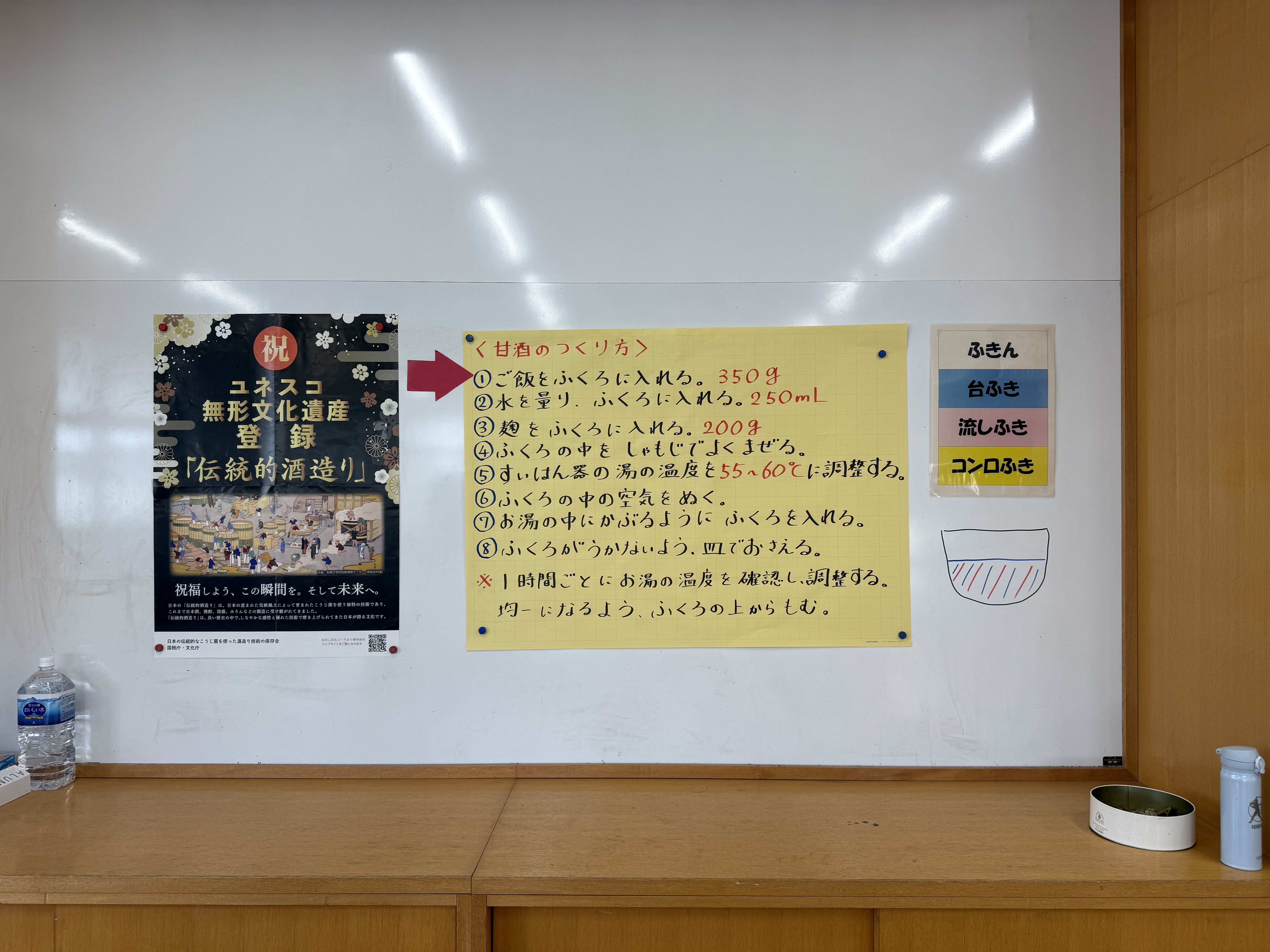
【How to Make Amazake】
①Put 350g of cooked rice into a bag.
②Measure 250ml of water and add it to the bag.
③Add 200g of koji into the bag.
④Mix well with a spatula.
⑤Fill the rice cooker about halfway with hot water at 55–60°C.
⑥Remove the air from the bag.
⑦Place the bag into the hot water so it is submerged.
⑧Use a plate to keep the bag from floating.
⑨Check and adjust the water temperature every hour.
⑩Knead the mixture through the bag to keep it even.
⑪Wait 8 hours.
Sharing the Power of Fermentation and Japanese Culture with the World
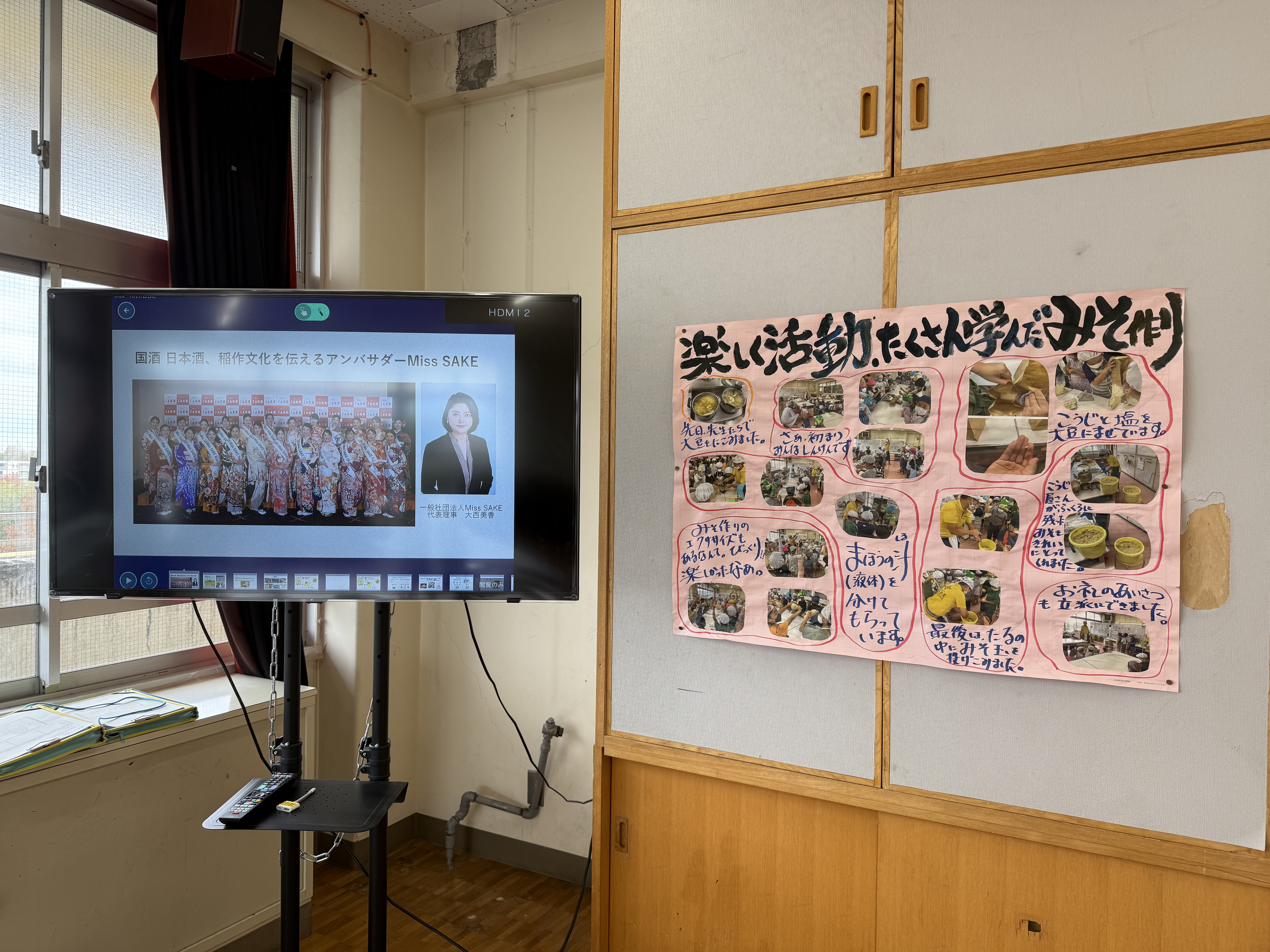
Next, Mika Ohnishi, Chairperson of Miss SAKE, gave a presentation on koji culture. Students, already familiar with the word koji from their miso-making experience, listened eagerly. The presentation covered the scientific name of koji mold, the fact that traditional koji-based sake brewing is registered as a UNESCO Intangible Cultural Heritage, and how deities related to sake appear in ancient Japanese mythology. Some students repeatedly practiced pronouncing the scientific name Aspergillus oryzae, while others asked questions such as “Is there a god of amazake?” Their curiosity brought an energetic atmosphere to the classroom.
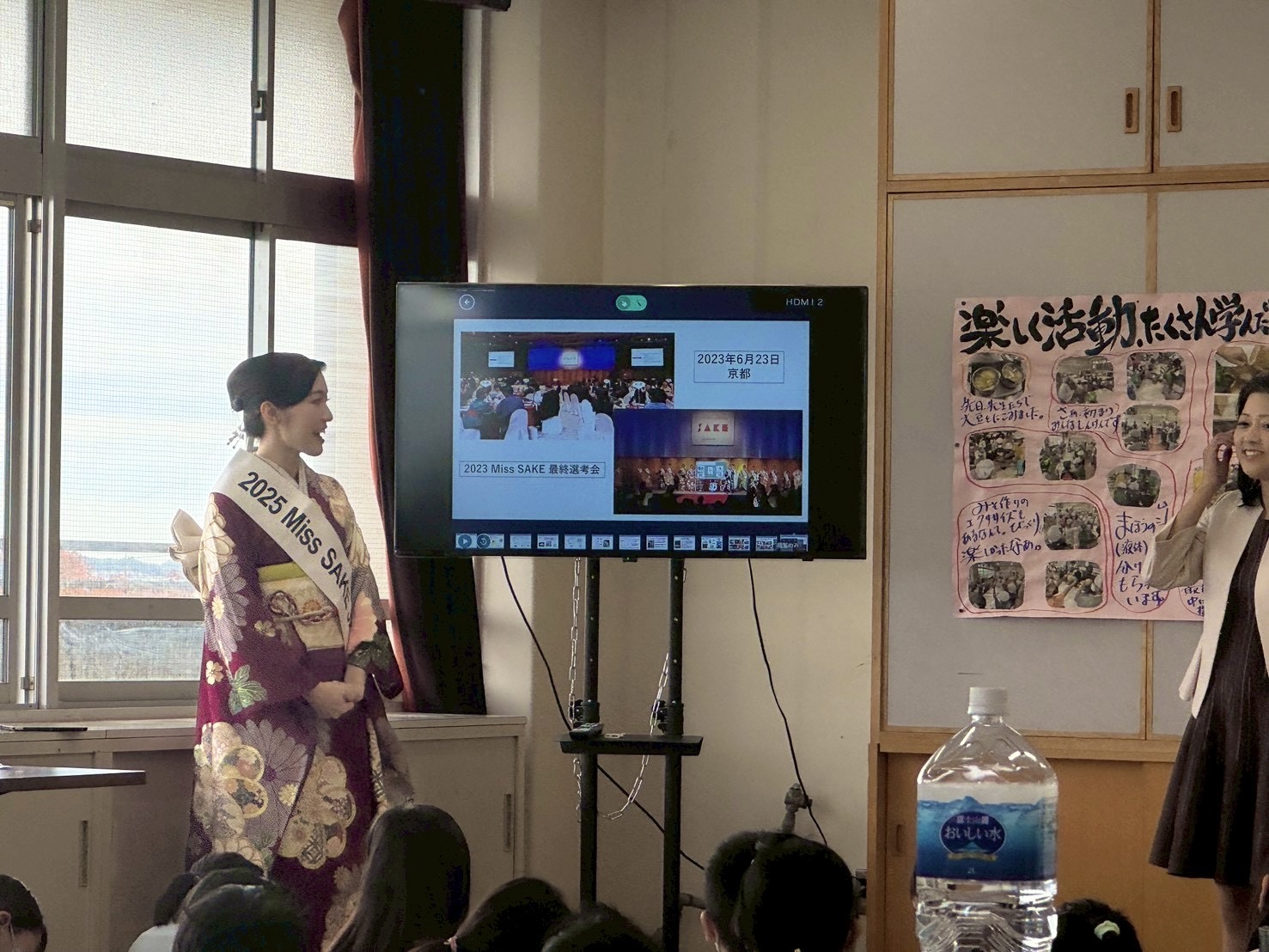
In the second half, I shared my own presentation about Miss SAKE’s mission and activities. When I showed photos from Ms. Chida’s final screening and various Miss SAKE events, the students’ eyes lit up with excitement—many whispering “Wow!” in admiration. I also talked about the international activities of Miss SAKE and how many people around the world love Japan. The students responded with surprise, saying, “Really?” As 4th graders who study foreign countries and English in their classes, I was delighted to show them how Miss SAKE aims to share the beauty of Japan with the world.
Experiencing the Joy of Koji and Fermentation
Amazake takes about eight hours to fully ferment. After the lesson, students carefully monitored their rice cooker every hour, nurturing their amazake until completion. Two days later, they finally enjoyed tasting it.
According to Ms. Chida, students said the amazake was “rich,” “sweet even without sugar,” and “nice and grainy.” Some even tried both warm and chilled versions and asked for seconds.
Although a few students were not fond of amazake itself, the class began developing original recipes using amazake so that everyone could enjoy its nutritional benefits. Through hands-on experience with koji, students naturally deepened their understanding of fermentation and Japanese food culture. It was a meaningful opportunity for me as Miss SAKE to help share the joy of koji, fermentation, and Japan’s culinary traditions with the next generation.
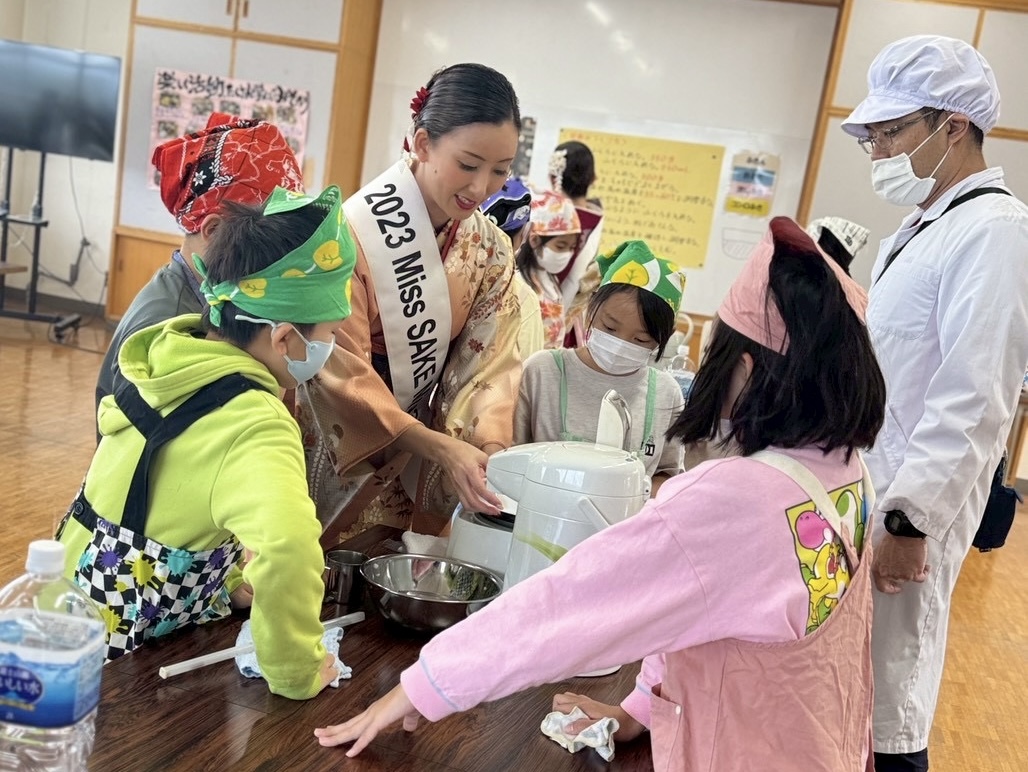
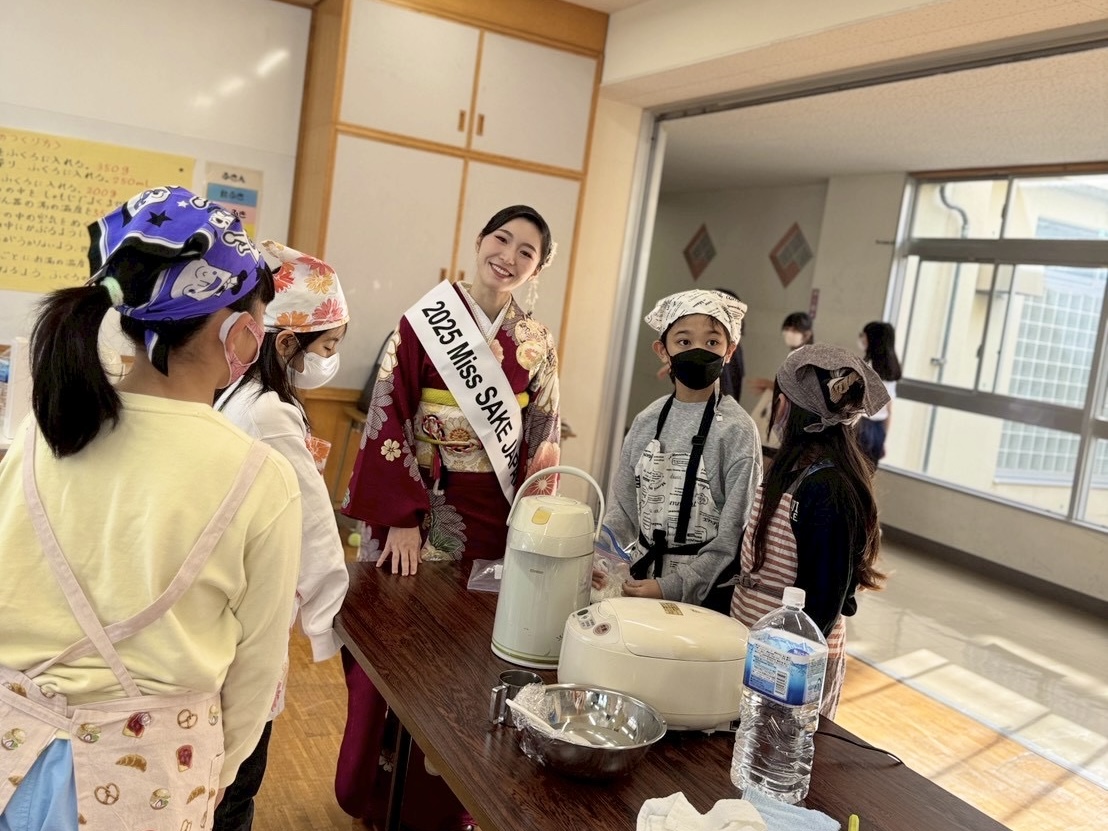
Participating in this “Amazake Making Workshop” reminded me of the importance of hands-on, sensory learning for children. Witnessing the moment when Japan’s traditional culture—koji, fermentation, and food heritage—came alive through real experience was deeply moving.
I strongly feel the responsibility and joy of continuing to share the richness of Japanese food culture with younger generations and with people all around the world. I will continue to do my best, with sincerity, to connect people with the beauty and depth of Japan’s traditions.
Chisato Tateno
2025 Miss SAKE Japan