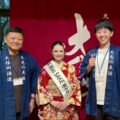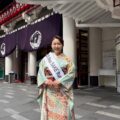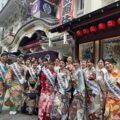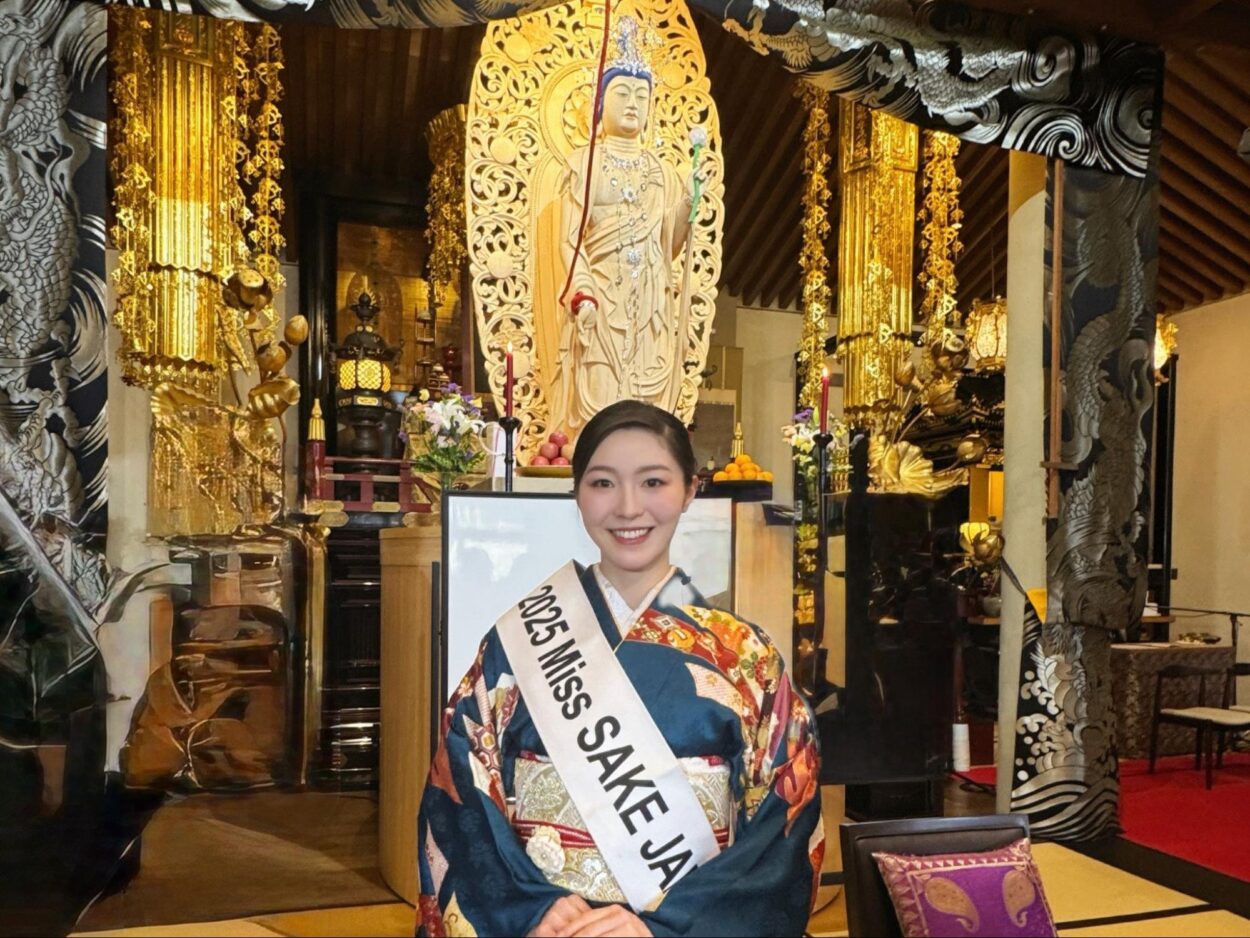
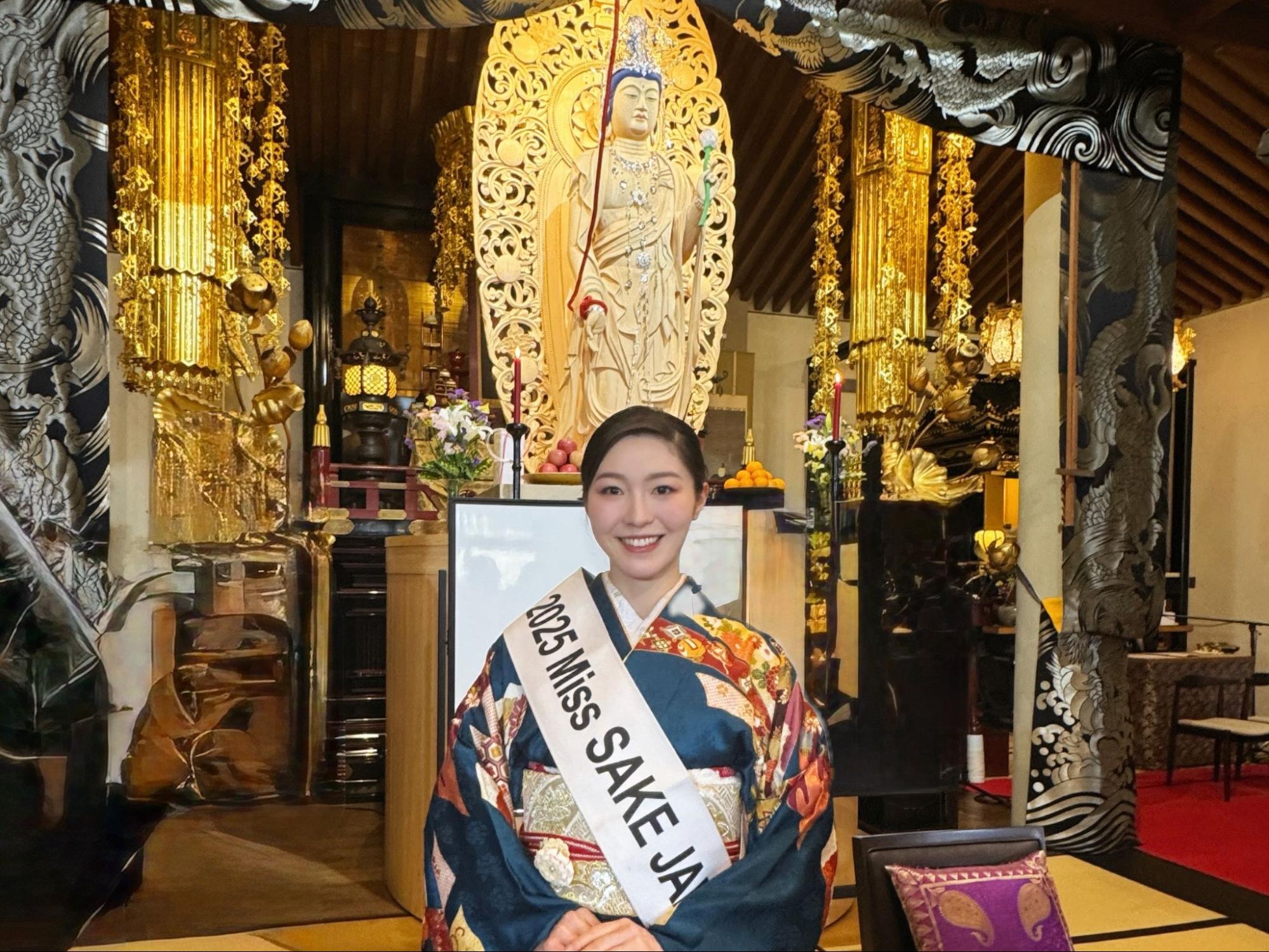
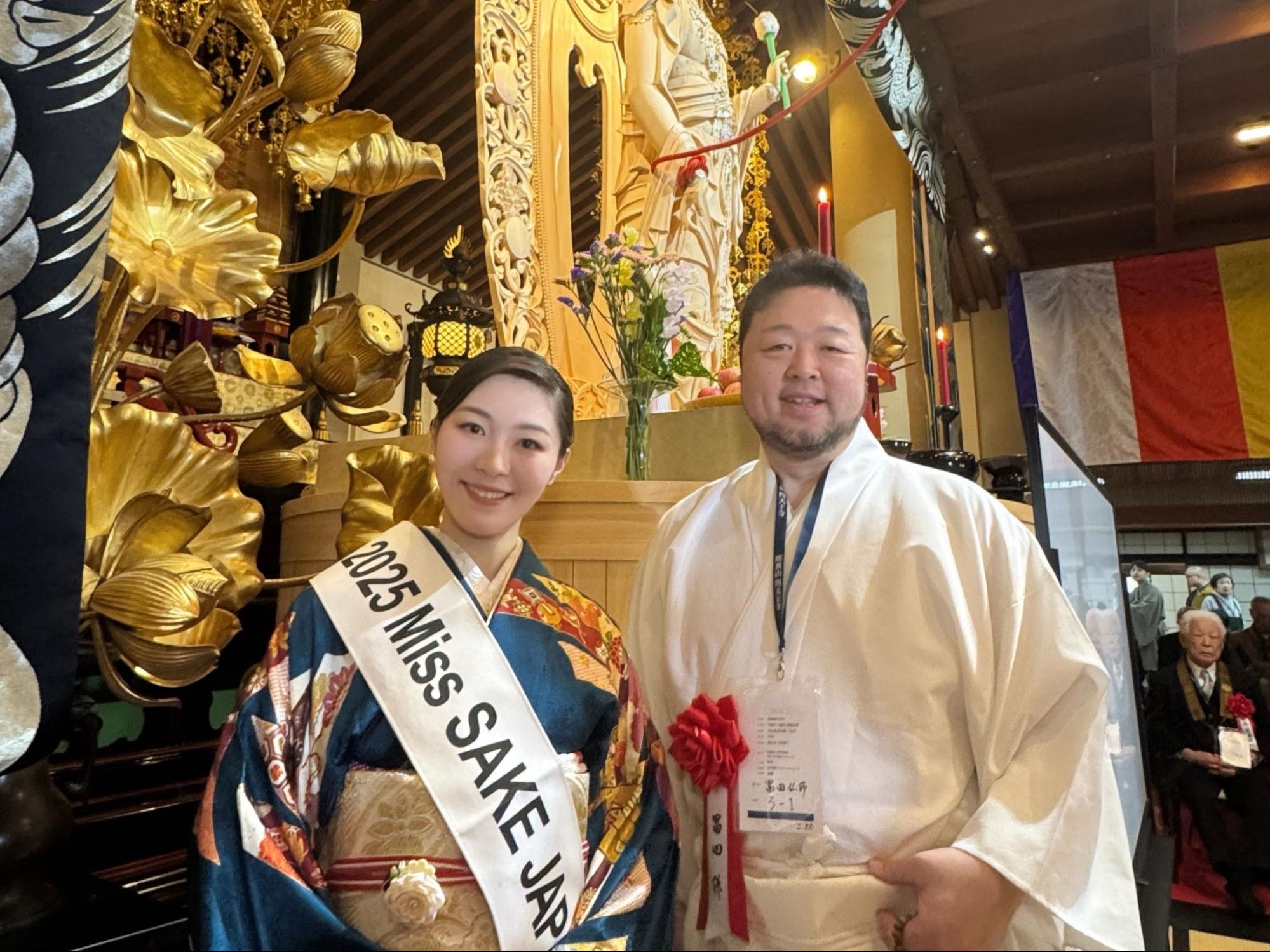
Hello everyone, this is 2025 Miss SAKE Japan, Chisato Tateno.
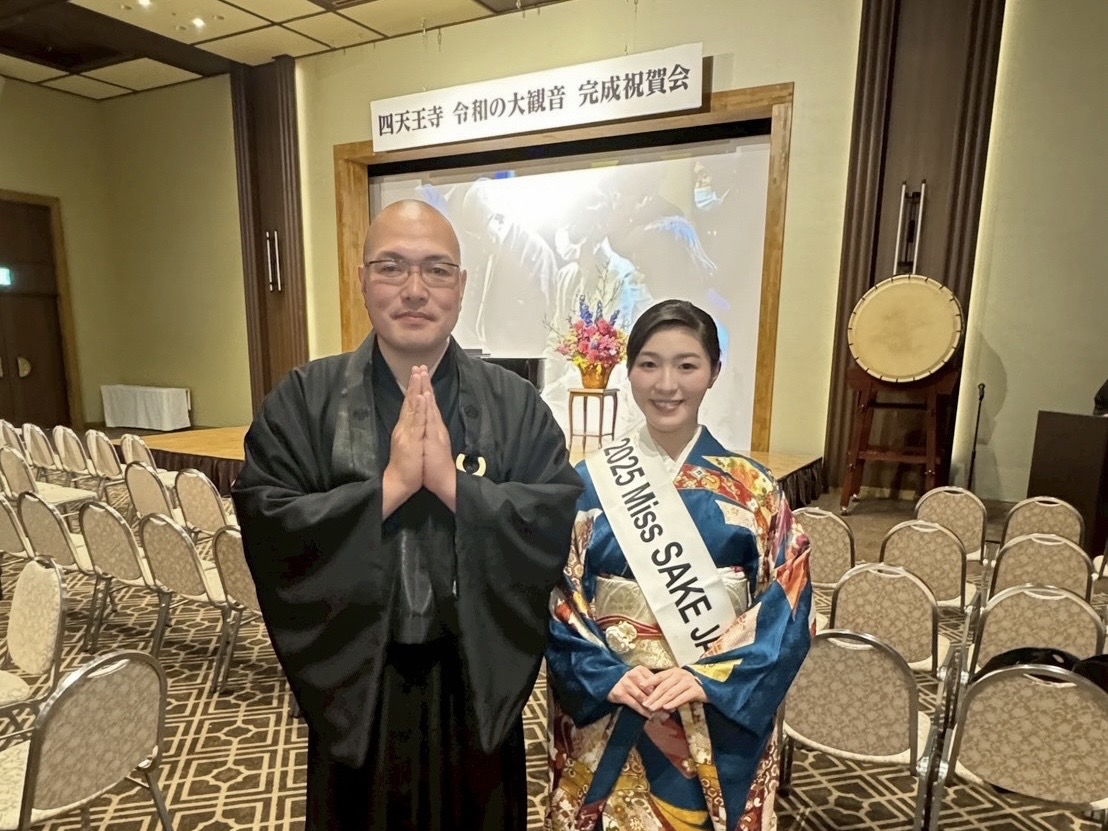
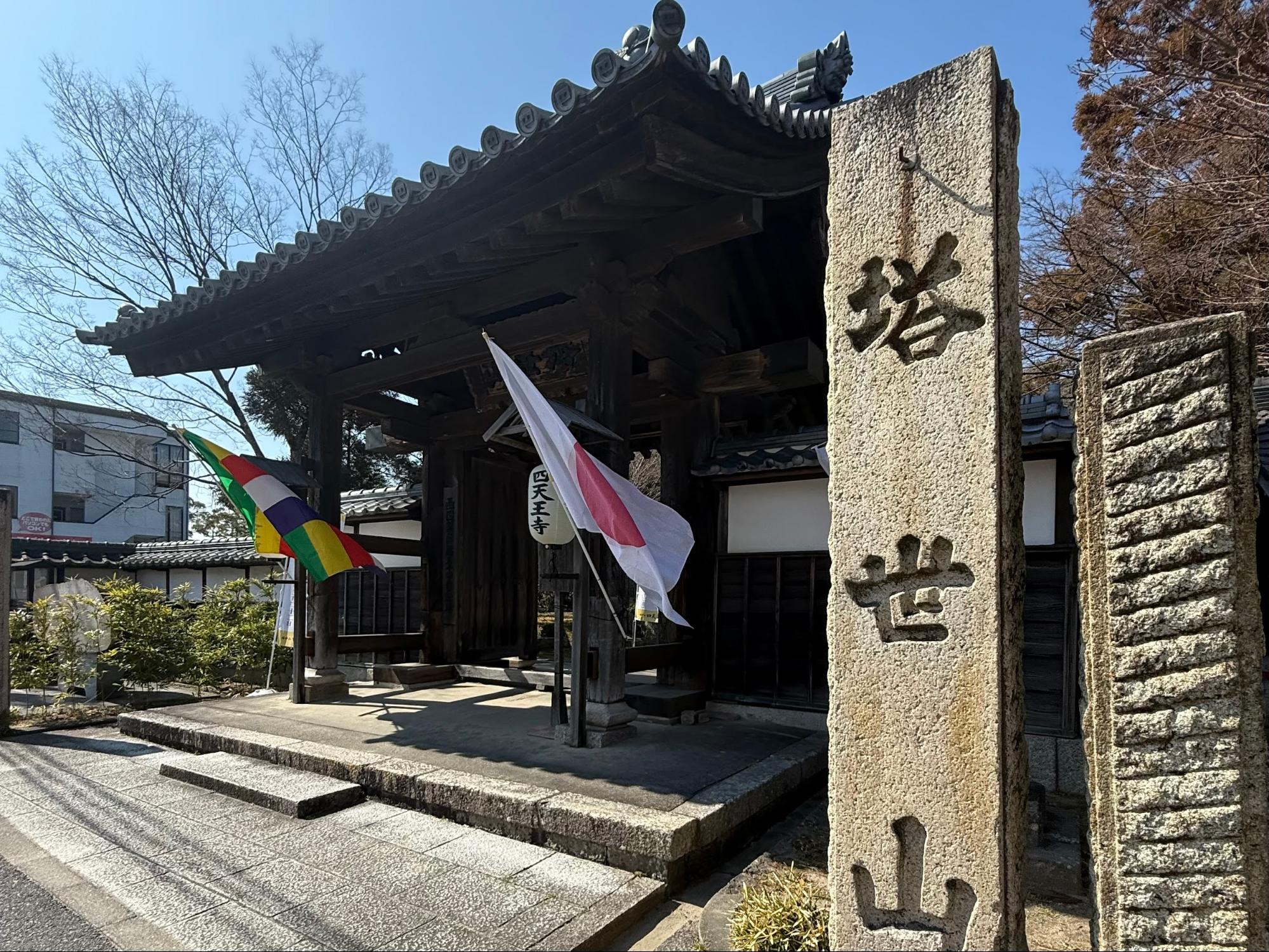
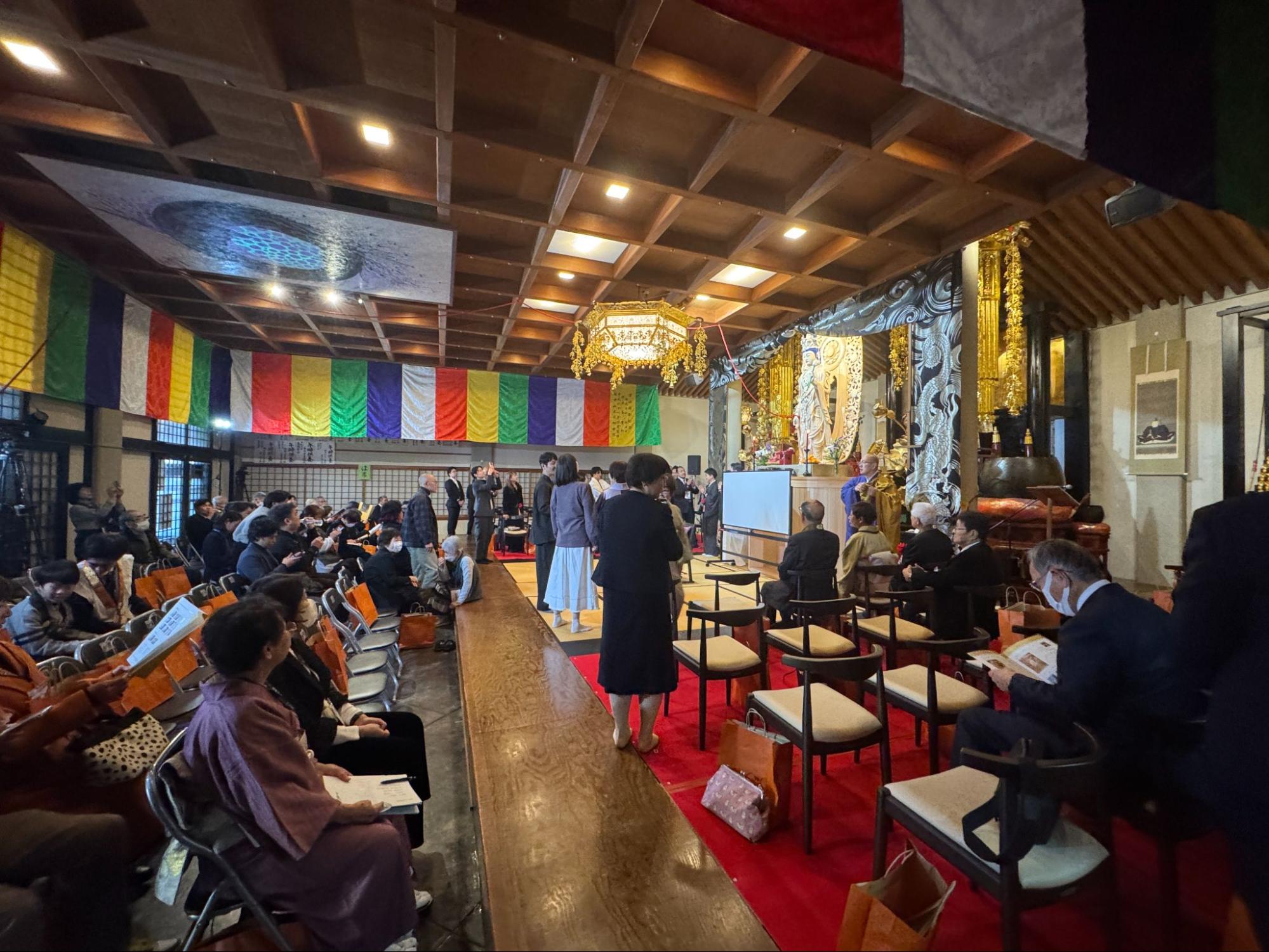
On Sunday, February 22, I had the honor of attending the “Reiwa Great Kannon Eye-Opening Ceremony” held at Tosezan Shitennoji Temple.
About the “Reiwa Great Kannon Eye-Opening Ceremony”
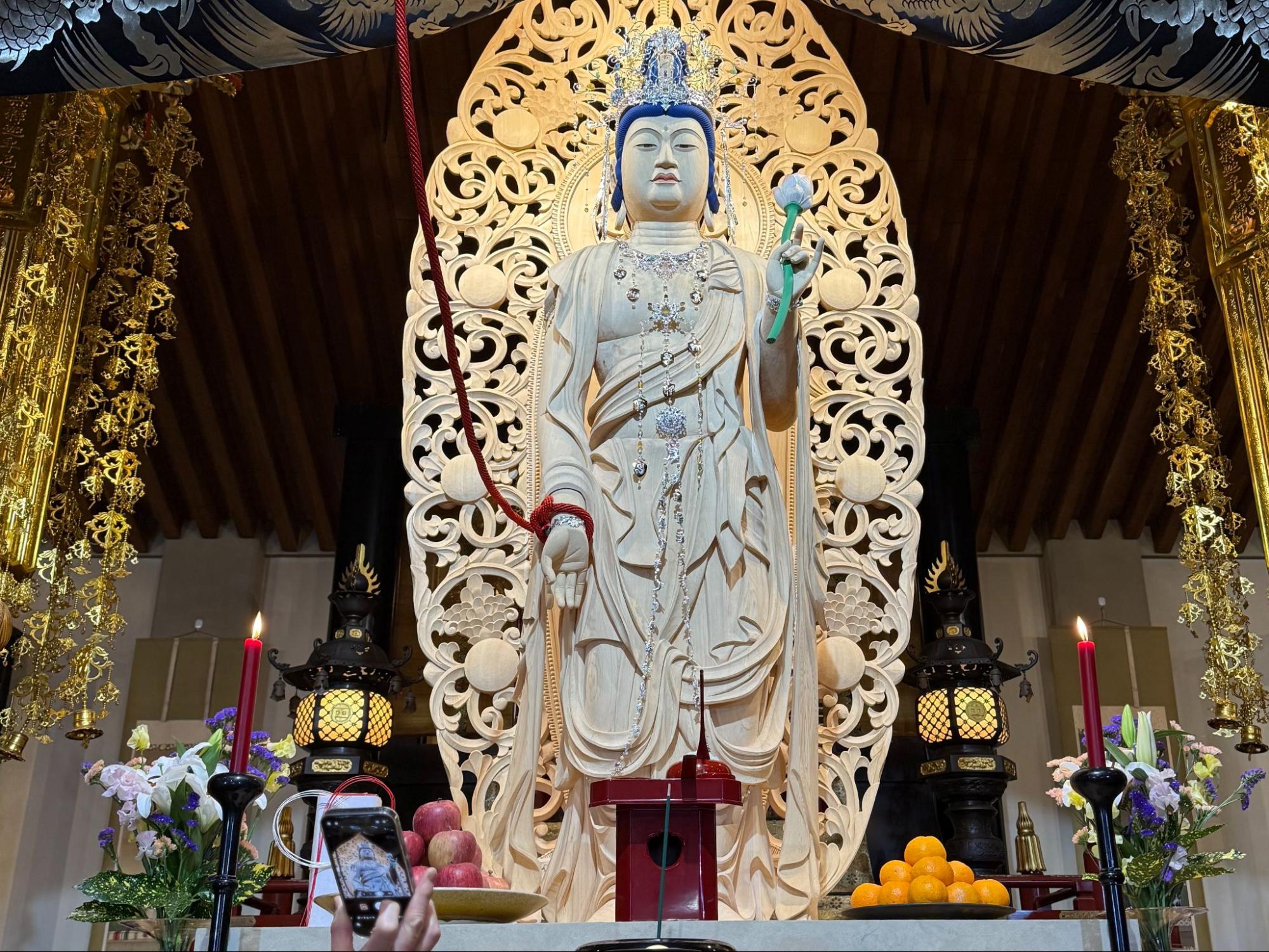
At the historic Tosezan Shitennoji Temple in Tsu City, Mie Prefecture, the “Reiwa Great Kannon Eye-Opening Ceremony” was solemnly held. This historic occasion celebrated the completion of a sacred five-meter-tall Kannon statue, whose construction took nearly twenty years, marking an important milestone in passing down the Japanese spirit of “prayer” and “harmony” to future generations. The day featured a variety of cultural programs, including a Buddhist sermon by the renowned Buddhist nun Rev. Shundo Aoyama, a ceremonial tea offering conducted by the Enshu School of Tea Ceremony, and a commemorative special concert. It became a spiritually profound and culturally significant event where Buddhist culture, tea ceremony tradition, and the arts beautifully came together.
▼Event Information
Event Name: Reiwa Great Kannon Eye-Opening Ceremony
Date: Sunday, February 22, 2026
Venue: Tosezan Shitennoji Temple▼Main Programs
・Reiwa Great Kannon Eye-Opening Ceremony (Main Hall)
・Dharma Talk by Rev. Shundo Aoyama: “Kannon-sama and the Seven Acts of Giving Without Wealth”
・Ceremonial Tea Offering to Lord Todo Takatora by the Enshu School of Tea Ceremony (Tea Master: Mr. Kobori Sosho)
・Special Exhibition of the “Jet-Black Tea Room”
・Limited-edition Goshuin (Temple Seal) Distribution
・Completion Memorial Special Concert by “The Miracle Pianist” Mr. Gohei Nishikawa
・Celebration Reception
The Moment Twenty Years of Prayer Came to Fruition
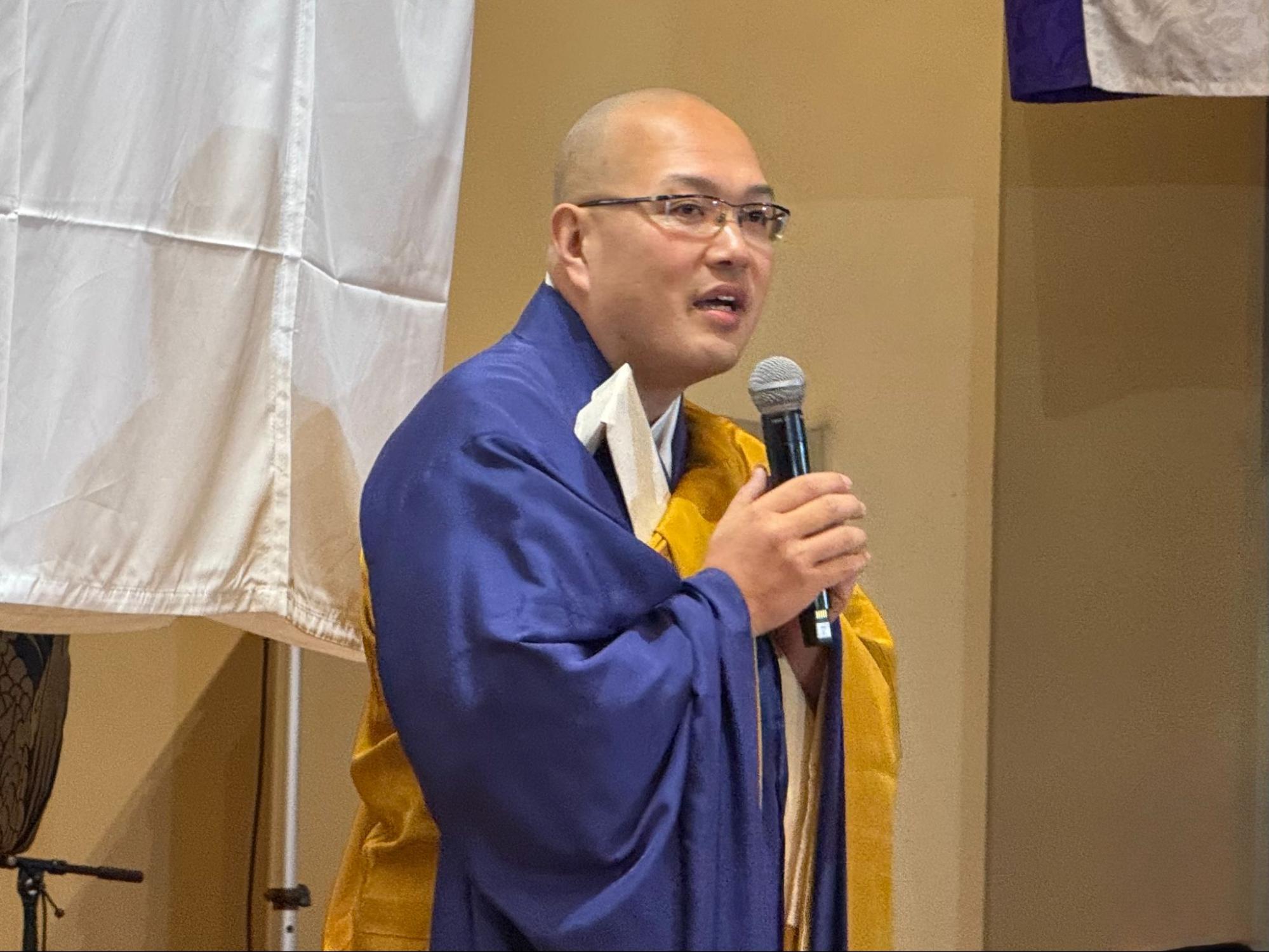
Prior to the ceremony, greetings were delivered by Rev. Ryugyo Kurashima, the 54th Chief Priest of Tosezan Shitennoji Temple. In his remarks, he reflected on the approximately twenty-year journey leading up to the realization of this ceremony and expressed deep gratitude to all those involved in the project. As part of the “Reiwa Great Kannon” project, the temple distributed as many as 110,000 goshuin seals throughout Japan over the course of approximately five years. Countless prayers and connections gathered from around the country ultimately culminated in this memorable eye-opening ceremony. I was deeply moved by the journey through which people’s prayers for peace and human connection took shape in the form of this sacred Kannon statue. This project was promoted under the vision of “preserving temples and shrines for the next hundred years,” led by Mr. Ryo Yoshida, founder of the shrine and temple search platform “Hotokami.”
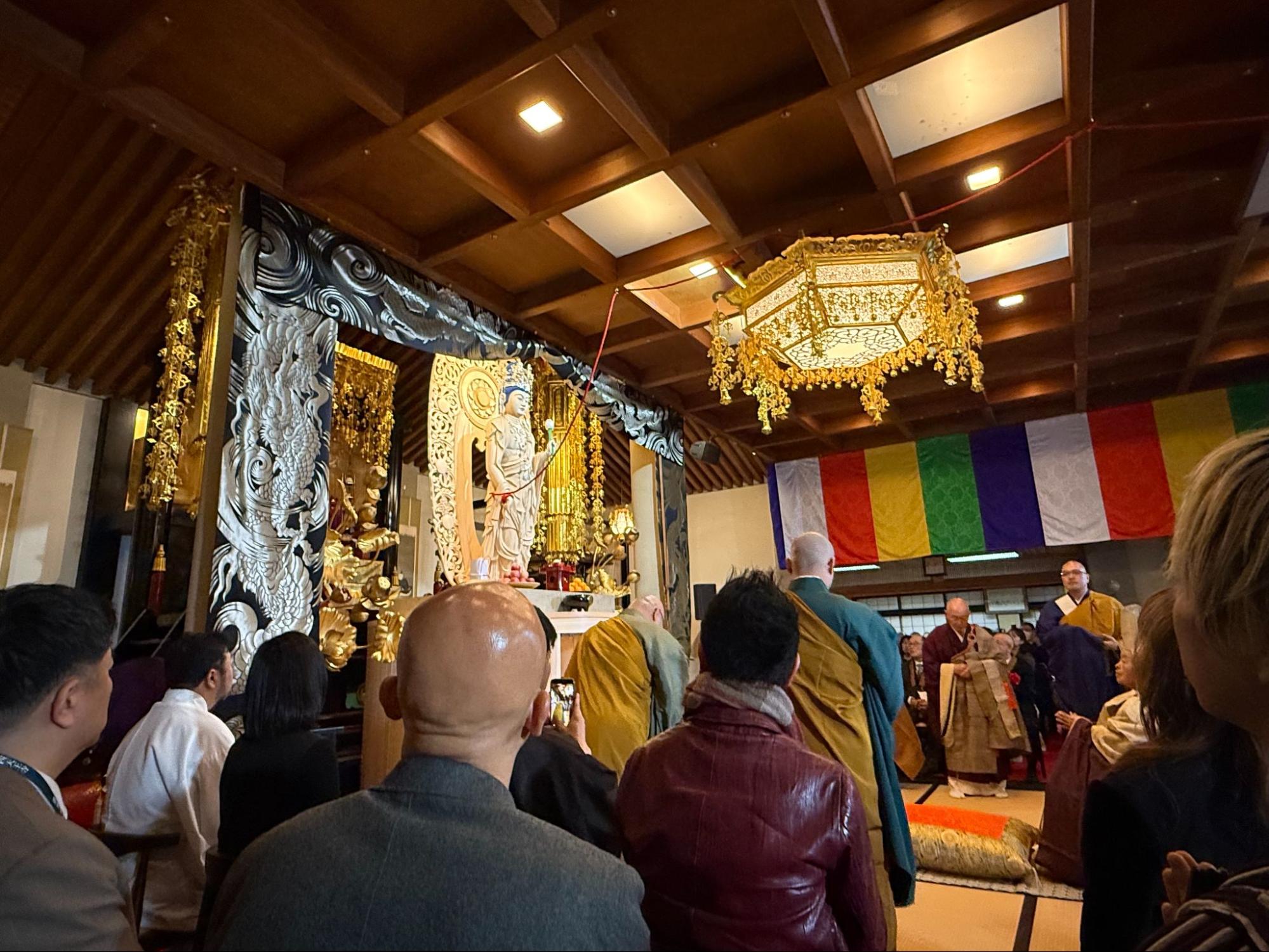
After the sutra chanting and ceremonial tea offering were solemnly presented, the long-awaited moment of the eye-opening finally arrived. As the white curtain was gently lowered, the “Reiwa Great Kannon” appeared before us, radiating a divine light and bearing an expression of serene compassion. Present at this historic moment were Buddhist sculptor Mr. Jhuun Tomita and metalwork artist Ms. Ena Ka, both of whom contributed to the creation of the statue. Outside the main hall, many worshippers stood in line, quietly holding their breath as they witnessed the unveiling.

Learning the Spirit of Zen from Rev. Aoyama
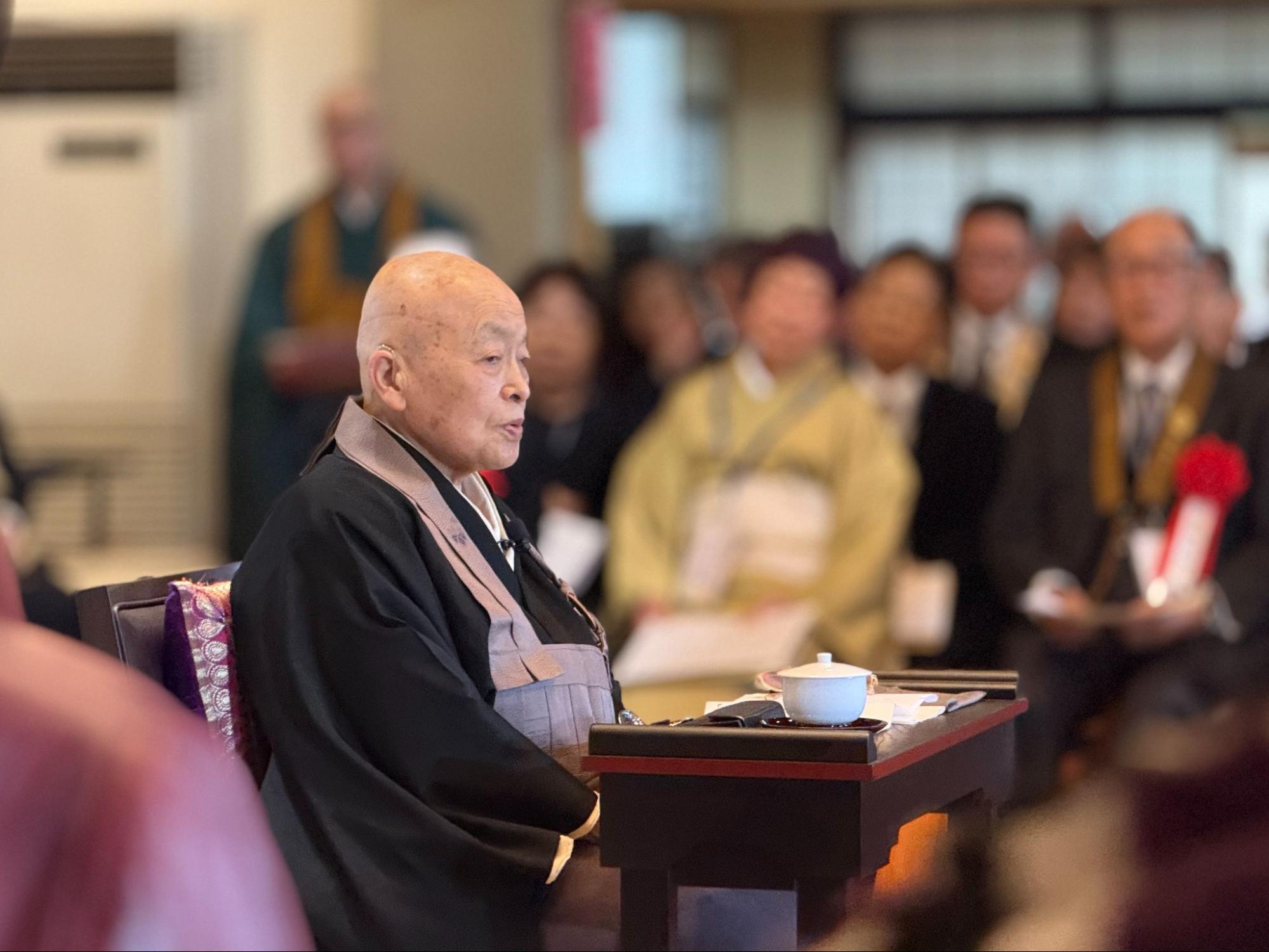
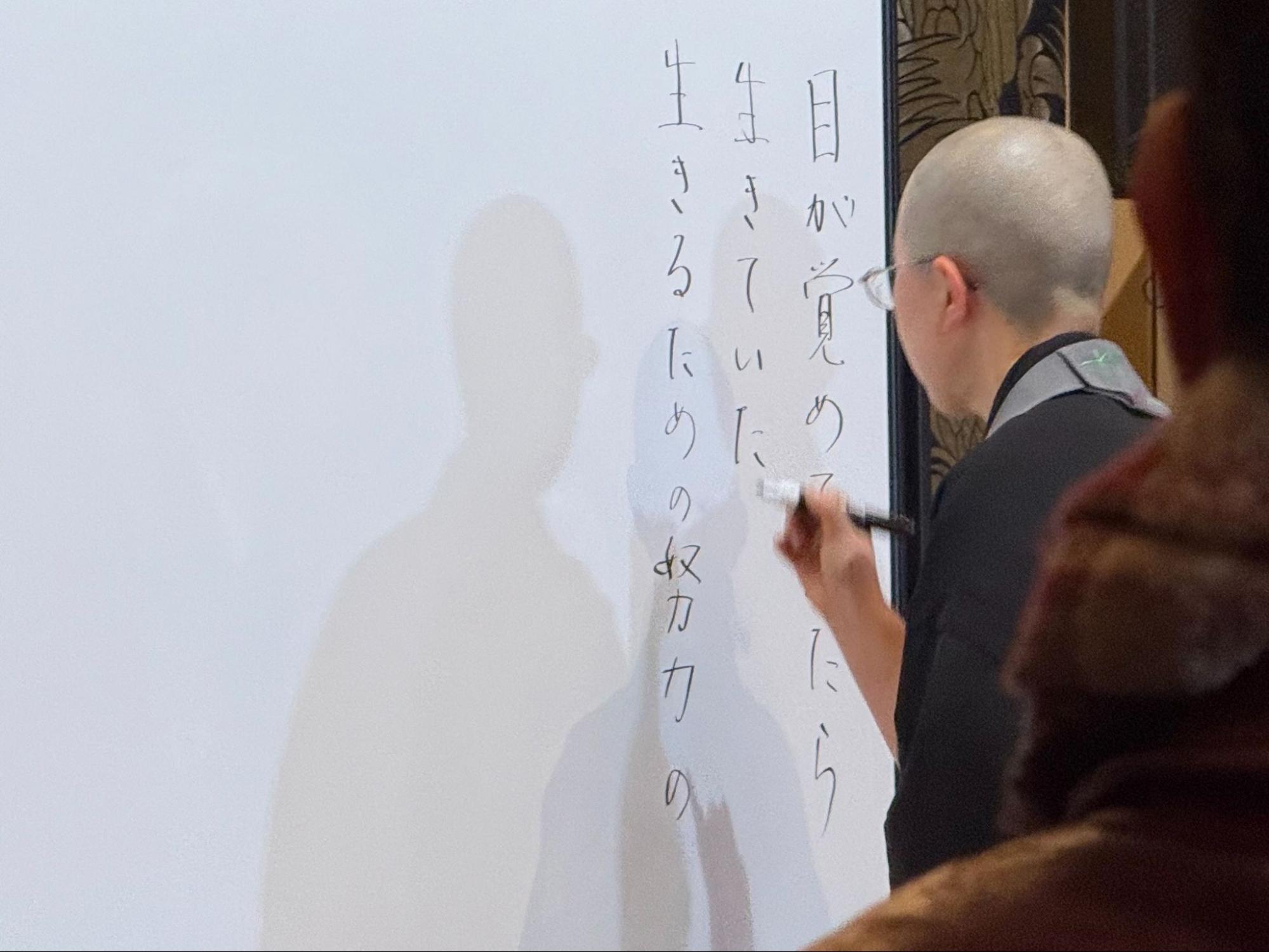
Following the ceremony, Rev. Shundo Aoyama delivered a Dharma talk titled “Kannon-sama and the Seven Acts of Giving Without Wealth.” Rev. Aoyama is one of Japan’s most distinguished Zen Buddhist nuns, becoming the first woman to receive the Soto Zen rank of Daikyoshi and to serve as Seido of Daihonzan Sojiji Temple. In her sermon, she taught that our lives do not exist solely through our own power, but are sustained by the workings of all things in heaven and earth. She explained this through the Buddhist phrase “Issoku Issai, Issai Issoku” — “One is all, and all is one.” Just as one supports all and all supports one, every individual existence and every emotion born within our hearts carries irreplaceable meaning. Her teachings reminded us to accept ourselves as we are and to once again feel gratitude for simply being alive in this present moment.
Another phrase that deeply resonated with me was: “How we live each day gradually carves our character.” Her words suggested that the accumulation of our daily choices shapes who we become. Even experiences such as illness, aging, and hardship are not signs of decline. As she expressed, “There are views that can only be seen on the downhill path.” It is precisely through suffering and trials that we cultivate compassion, understanding for others, and genuine awareness. Standing before the Reiwa Great Kannon, Rev. Aoyama spoke about the importance of turning our hearts toward the life we have been given and continuing to ask ourselves how we should live beyond self-centered perspectives. It was a deeply thought-provoking and spiritually enriching moment.
Connections Resonating Through the Celebration Reception
Afterward, the venue moved to Hotel Tsu Center Palace, where a commemorative celebration reception was held. The reception began with a powerful taiko drum performance by Mr. Hiroyuki Hattori. The resonating sounds of the drums filled the venue, stirring the hearts of all in attendance and creating a magnificent opening to the celebration.
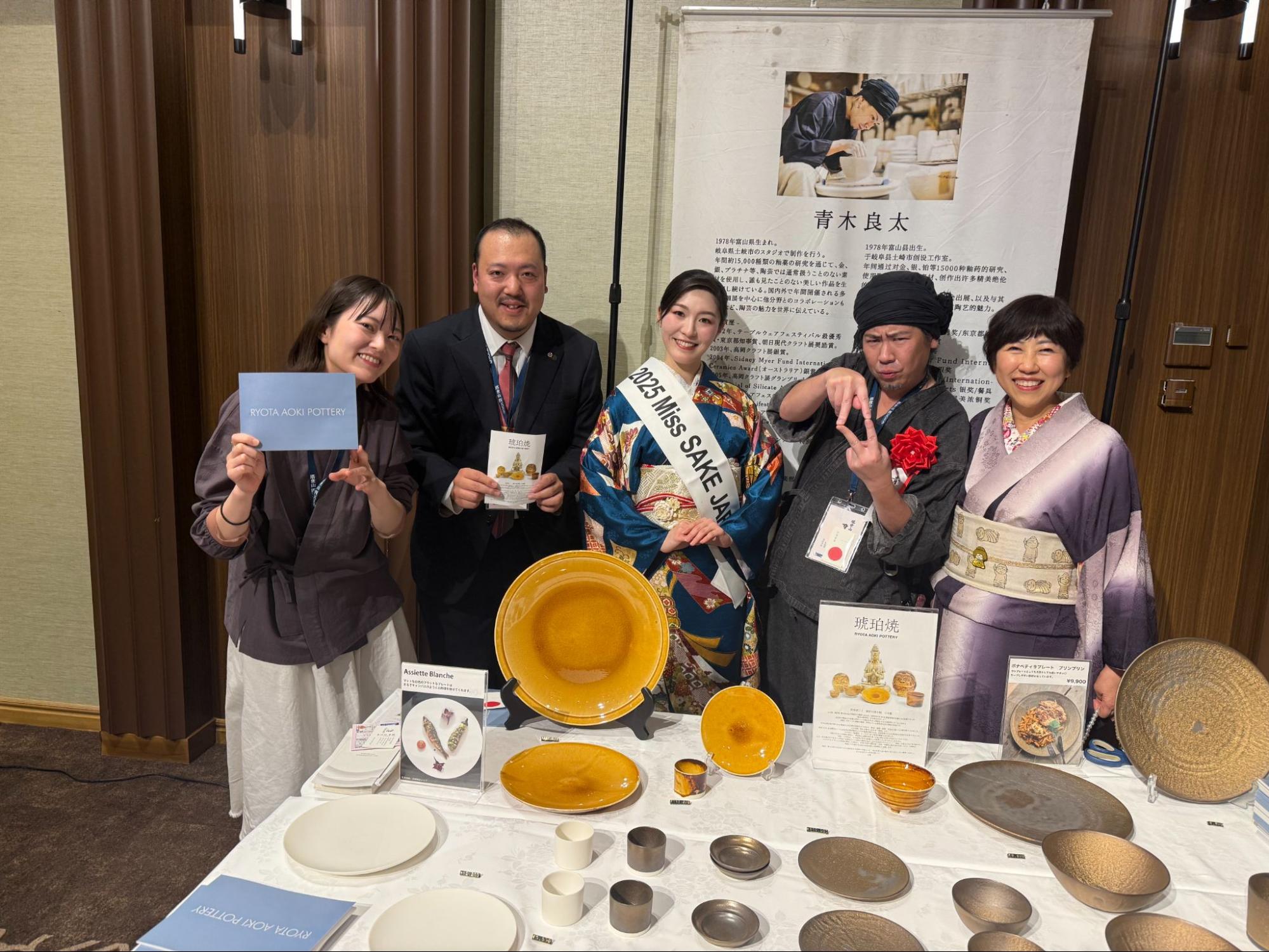
People of all ages and professions gathered together through their shared connection to the “Reiwa Great Kannon.” Warm conversations and heartfelt exchanges filled the hall. During the reception, temple parishioners and those involved in the project were introduced, and everyone shared in the joy and emotion of the ceremony while uniting their hearts in prayer for the Kannon statue that will undoubtedly continue to inspire people decades and centuries into the future.
Toward the end of the reception, pianist Mr. Gohei Nishikawa gave a special performance and talk session. Based in New York and active on the world stage, he is internationally recognized for performances such as the finale of the closing ceremony of the Tokyo 2020 Paralympic Games. Behind his remarkable career lies the experience of developing dystonia, after which he was told by doctors that he would never play the piano again. Through tireless rehabilitation, he now performs uniquely with seven fingers across both hands. Mr. Nishikawa spoke about the importance of sincerely facing people and experiences without prejudice, as well as the power of expressing one’s dreams honestly rather than hiding them modestly away. His words and music left a profound impression on everyone present, perfectly fitting for a day that marked a new beginning through the eye-opening ceremony.