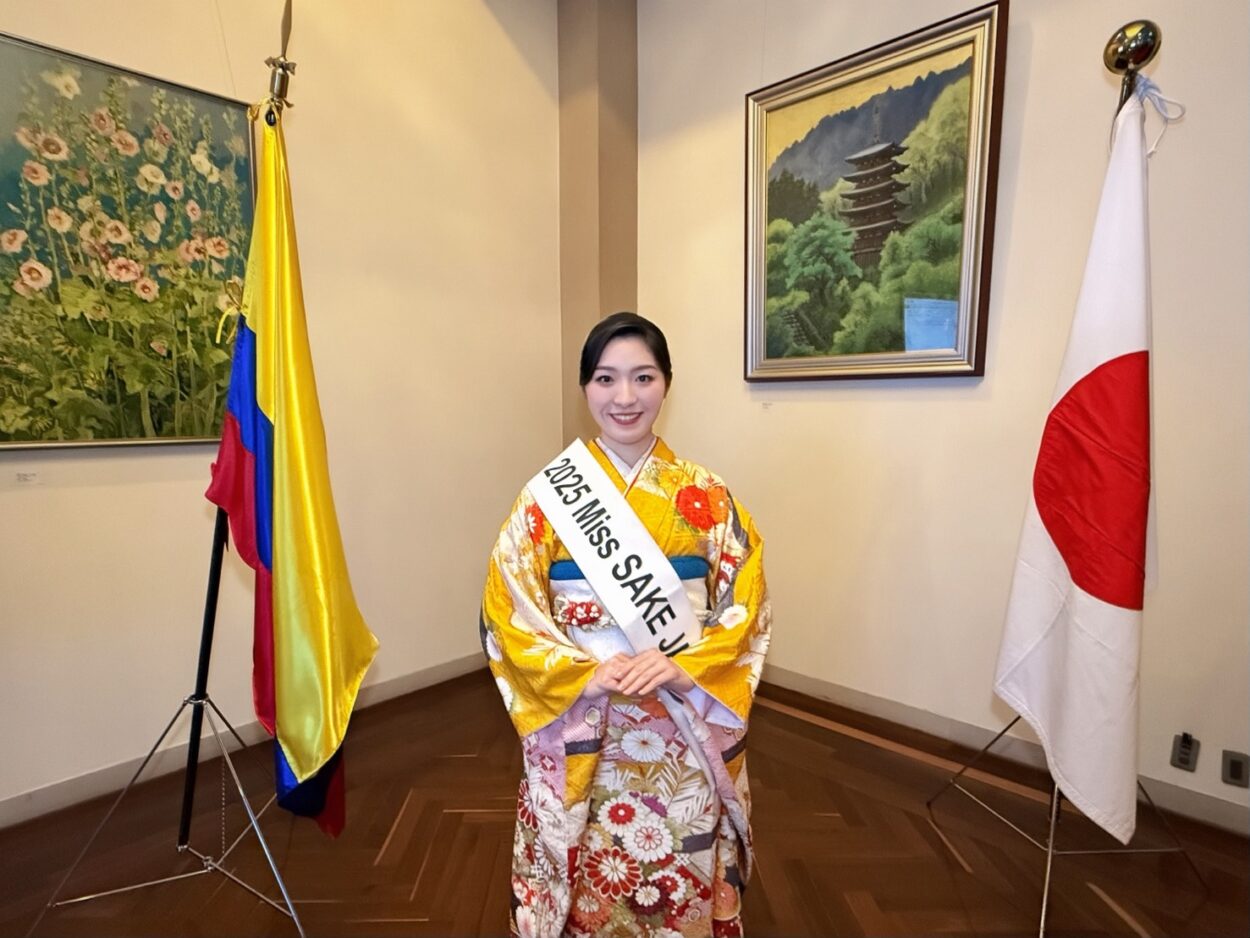
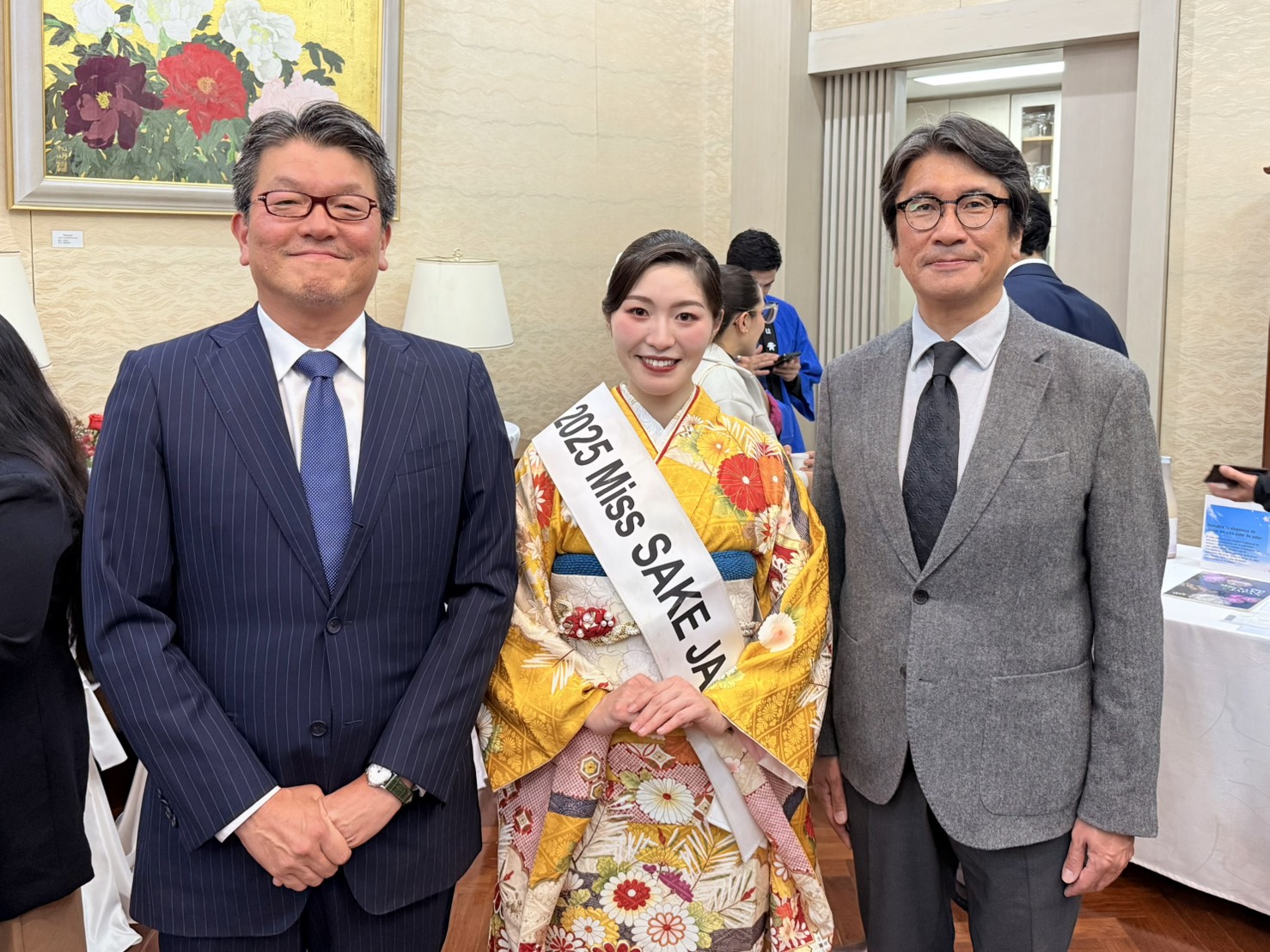
Hello everyone, this is Chisato Tateno, 2025 Miss SAKE Japan.
On Thursday, April 23, I had the honor of speaking as a presenter at the “Japanese Food & Sake PR Reception” held at the Embassy of Japan in Colombia. Together with Ms. Mika Onishi, Representative Director of the Miss SAKE Association, we also introduced and served five varieties of Japanese sake to more than 100 guests in attendance.
Deepening Friendship Between Japan and Colombia
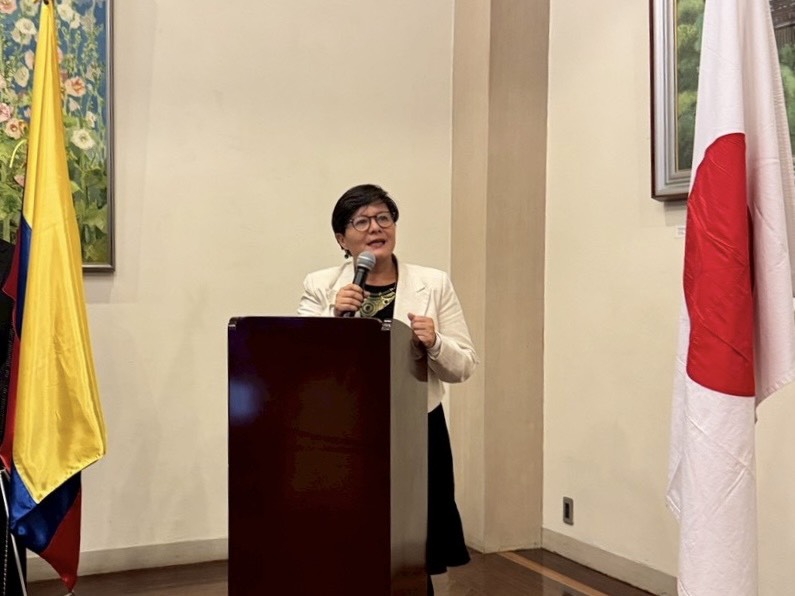
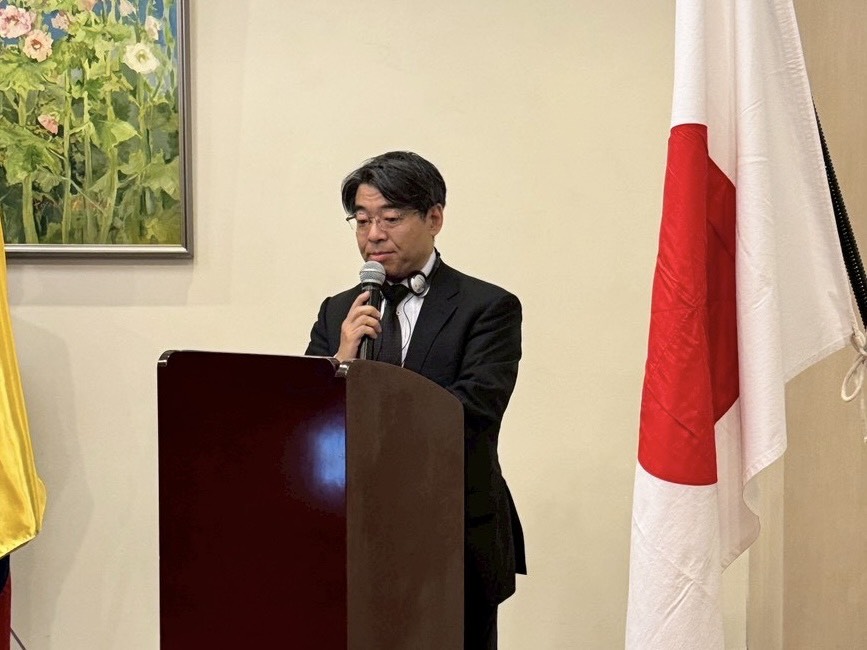
The reception began with opening remarks from H.E. Toru Shimizu, Ambassador Extraordinary and Plenipotentiary of Japan to Colombia; Ms. Yenly Angélica Méndez, Director of International Relations at the Ministry of Agriculture and Rural Development of Colombia; and Mr. Hiroyuki Nishiura, Deputy Director-General of the Export and International Affairs Bureau of Japan’s Ministry of Agriculture, Forestry and Fisheries.
Japan and Colombia have maintained a long-standing friendship, with the 120th anniversary of diplomatic relations approaching in 2028. Furthermore, in September 2025, a Memorandum of Cooperation (MoC) between Japan’s Ministry of Agriculture, Forestry and Fisheries and Colombia’s Ministry of Agriculture and Rural Development regarding cooperation in agricultural technology, investment, and trade was signed. Cooperation in the fields of agriculture and food continues to deepen steadily, and even greater development is anticipated in the years ahead.
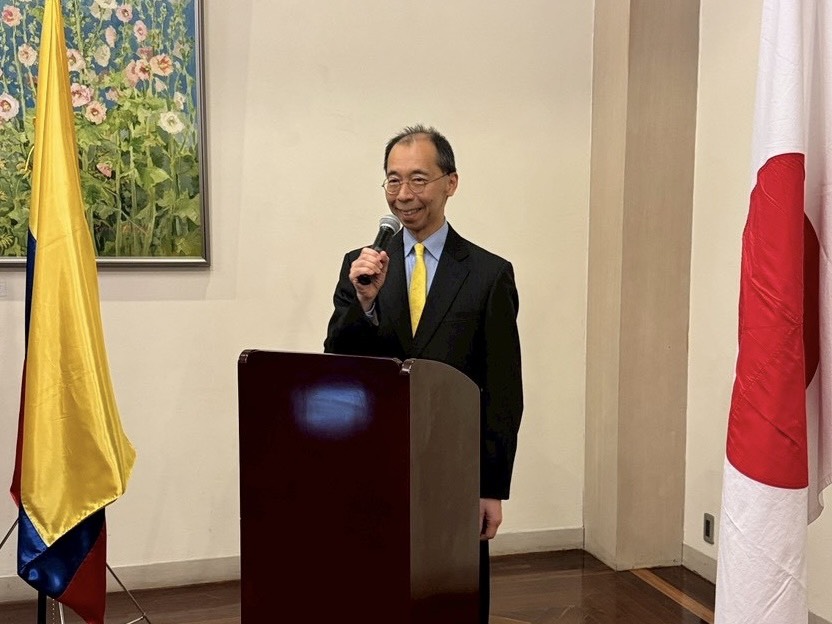
Bringing “SAKE” into Everyday Life in Colombia
Following the toast, I was given the opportunity as Miss SAKE to introduce Japanese sake, one of the most symbolic elements of Japanese food culture, to the guests gathered at the venue.
Born from the climate and natural environment of Japan—an island nation surrounded by the sea—Japanese sake has been cultivated through the harmony of nature, tradition, and craftsmanship. During the presentation, I introduced its historical background, regional diversity, ingredients, brewing process, and the growing international recognition it has received in recent years from multiple perspectives. In particular, many guests showed strong interest in the fact that sake has a history spanning over 2,000 years and that the traditional knowledge and skills related to sake brewing were registered as a UNESCO Intangible Cultural Heritage in December 2024. While the word “SAKE” itself is gradually becoming recognized in Colombia amid growing interest in Japanese cuisine, many aspects of the culture and charm behind it are still not yet widely understood. Through this seminar, I was truly delighted to share that sake is not merely an alcoholic beverage, but a cultural symbol rich in history, craftsmanship, and diversity.
After the lecture, many participants approached me to share their impressions, saying things such as, “This was my first time truly understanding sake,” and “I had no idea it had such a long history.” Several guests also asked questions about “koji” and fermentation culture, which reflected a strong curiosity toward the deeper foundations of Japanese food culture.

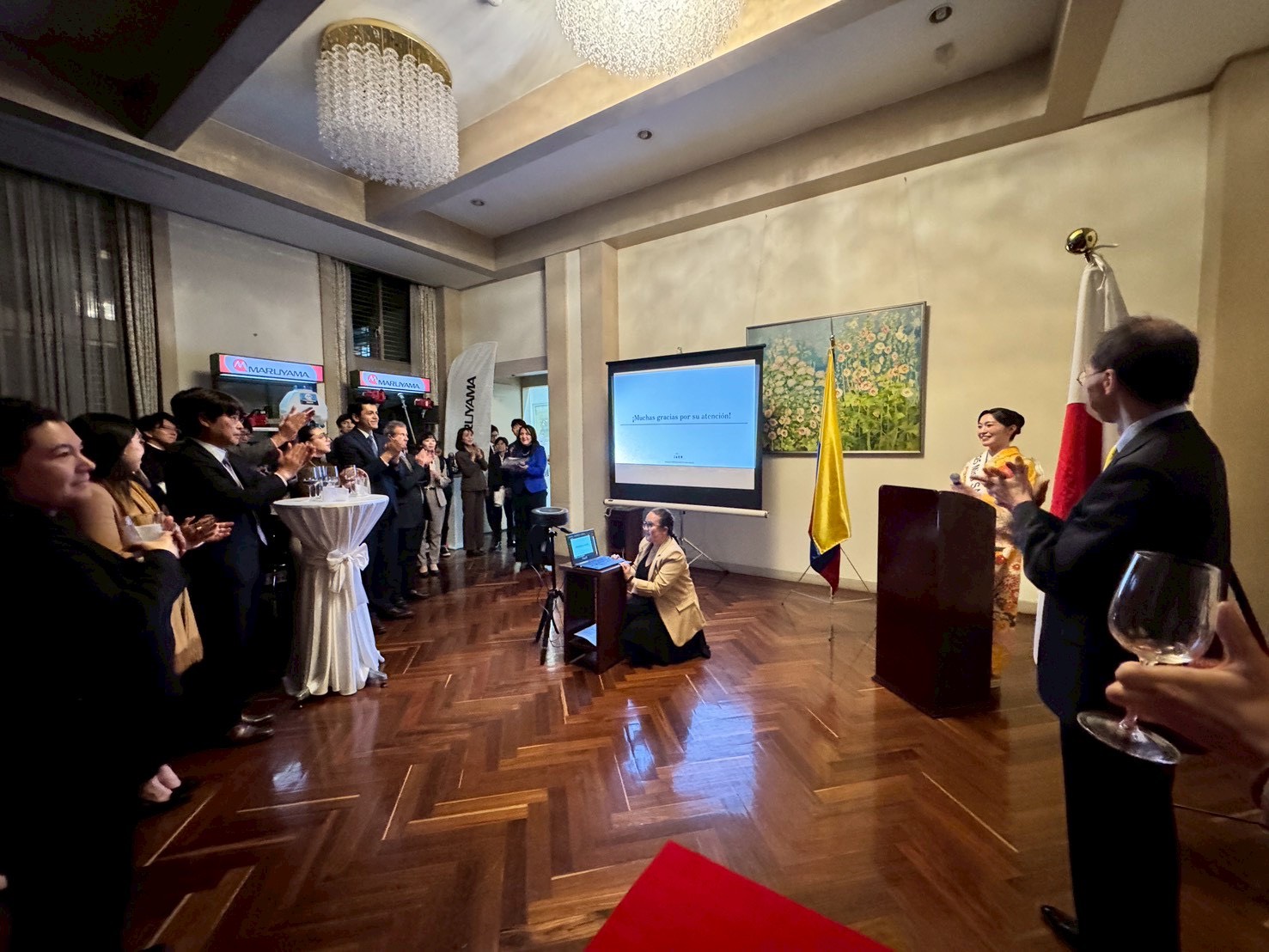

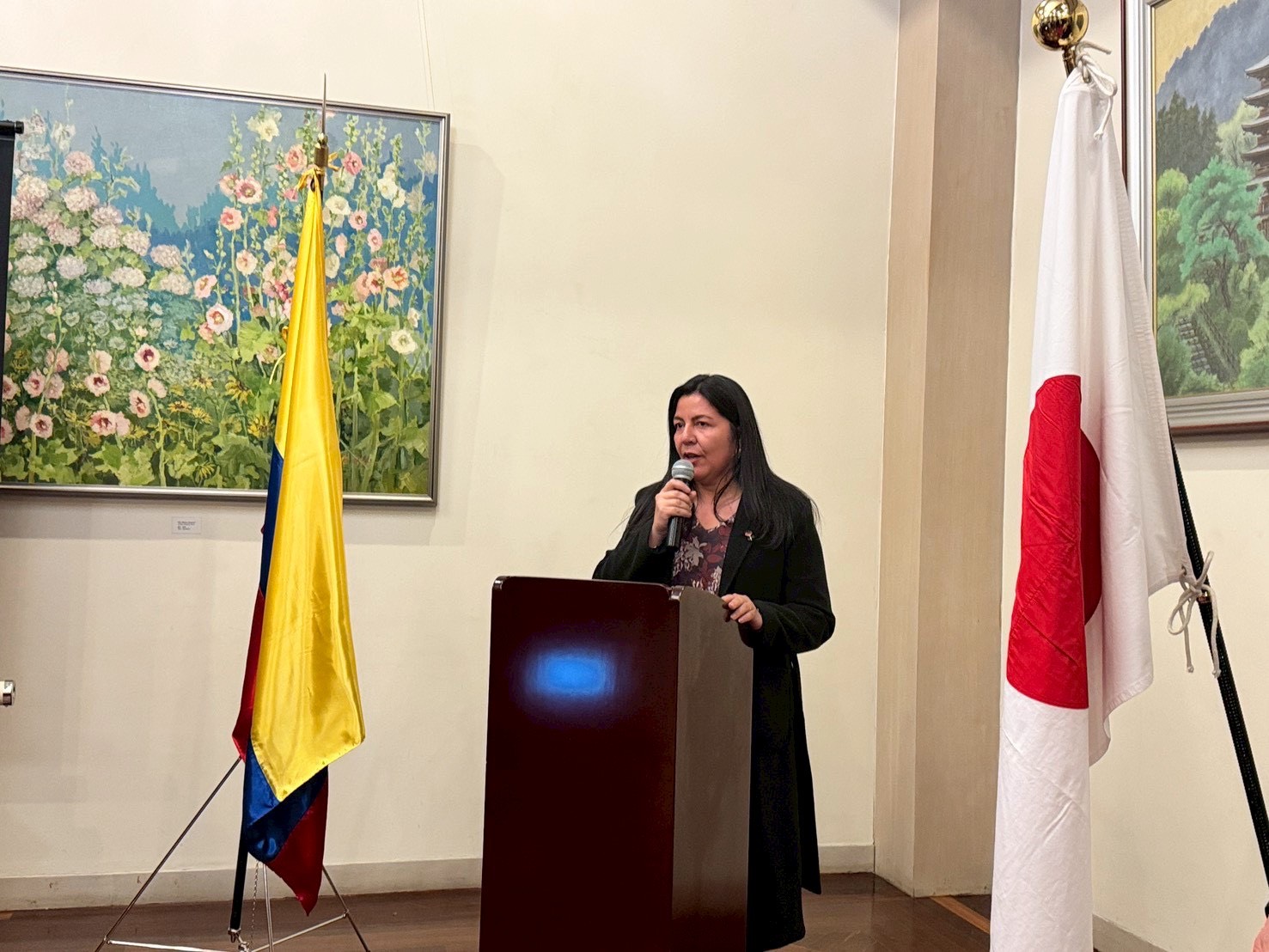
Following this, remarks were also delivered by Ms. Geidy Xiomara Ortega, Vice Minister for Agricultural Affairs at the Ministry of Agriculture and Rural Development of Colombia, who expressed expectations for further strengthening cooperation between the two countries through food and agriculture. It became another meaningful opportunity to feel the growing momentum toward stronger ties between Japan and Colombia despite the geographical distance separating them.

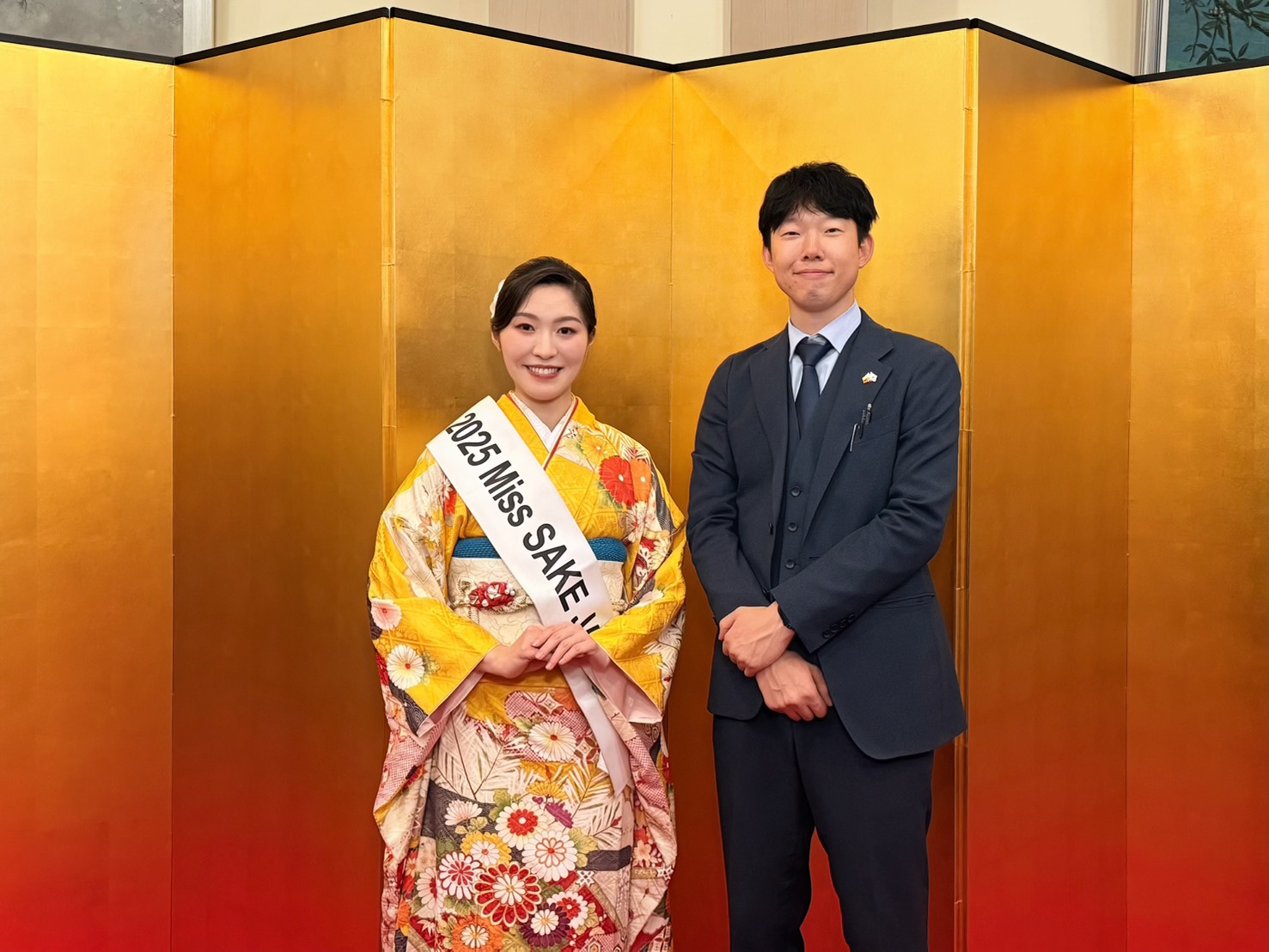
International Exchange Through Food
During the reception that followed, we introduced the following sake selections at the Japanese sake booth:
- Born “Tsuya” Junmai Daiginjo — Katokichibee Shoten (Fukui Prefecture)
- Masuizumi Junmai — Masuda Shuzoten (Toyama Prefecture)
- Narutotai Junmai Ginjo LED — Honke Matsuura Sake Brewery (Tokushima Prefecture)
- Hokusetsu Daiginjo YK35 — Hokusetsu Sake Brewery (Niigata Prefecture)
- Kizakura Junmai Nigori — Kizakura (Kyoto Prefecture)
In addition to sushi prepared by the Japanese restaurant NANA, the venue also featured Japanese sweets, beverages, and dishes representing Colombian food culture, creating a vibrant space for cultural exchange through cuisine.
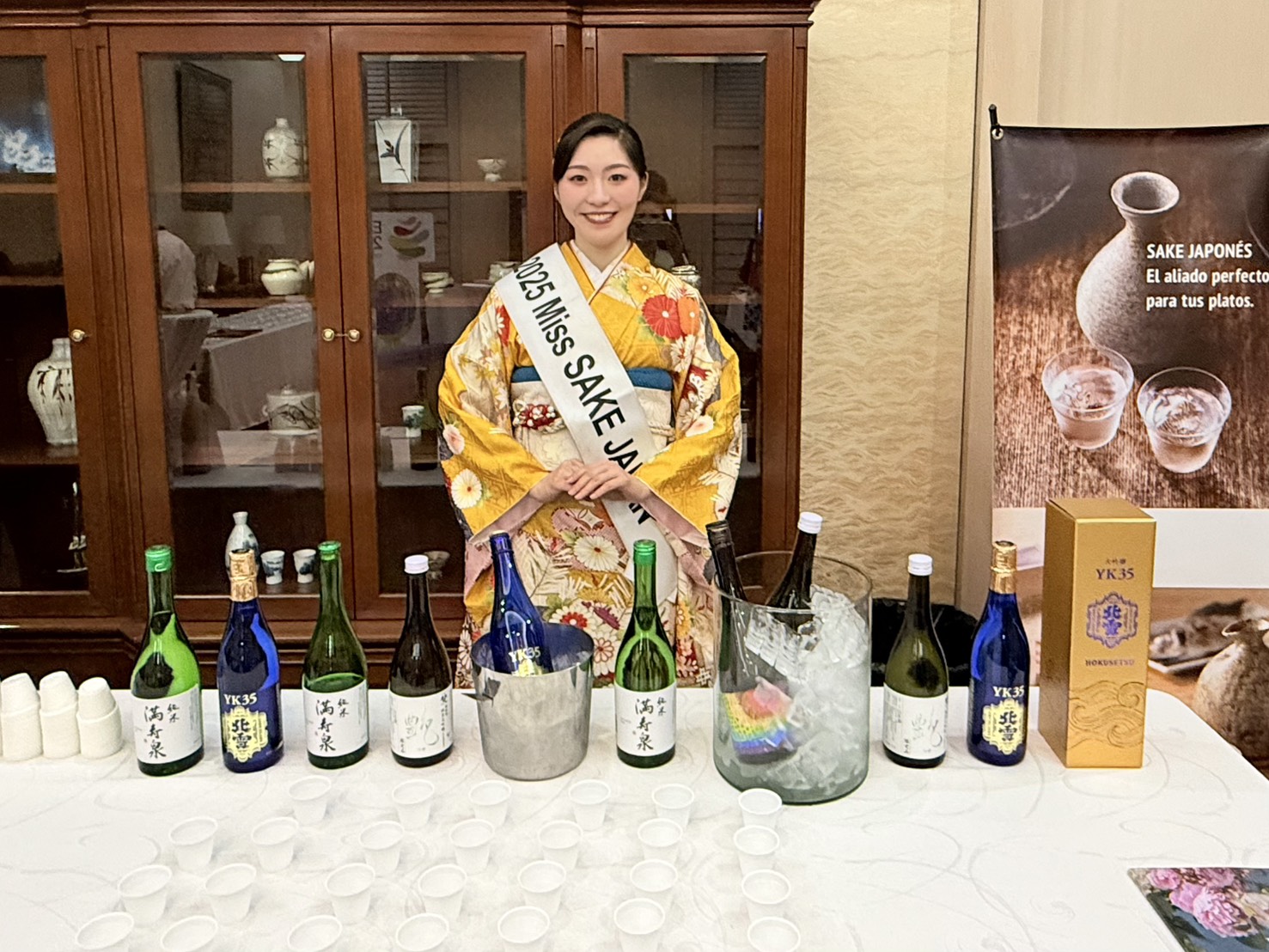
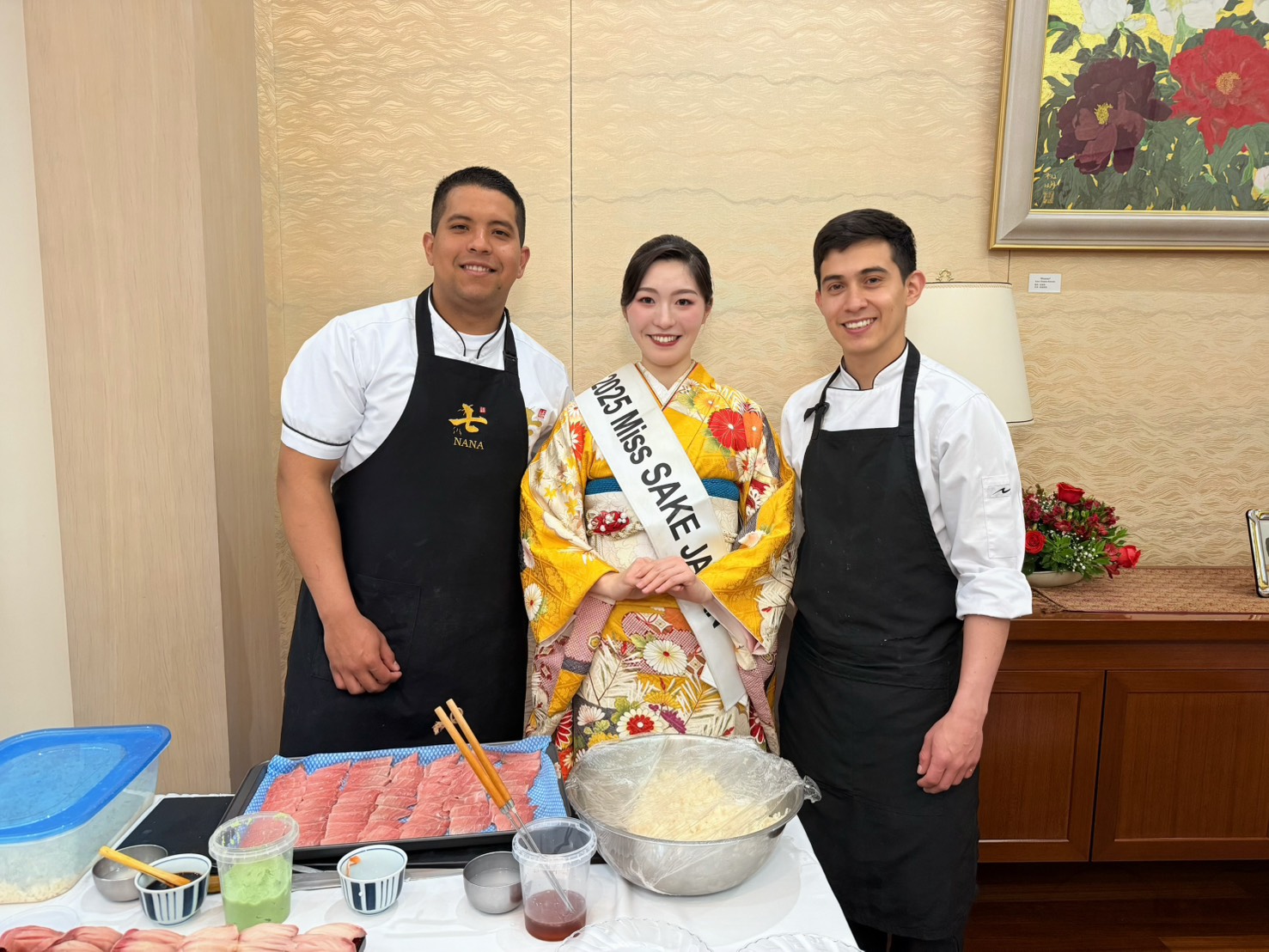
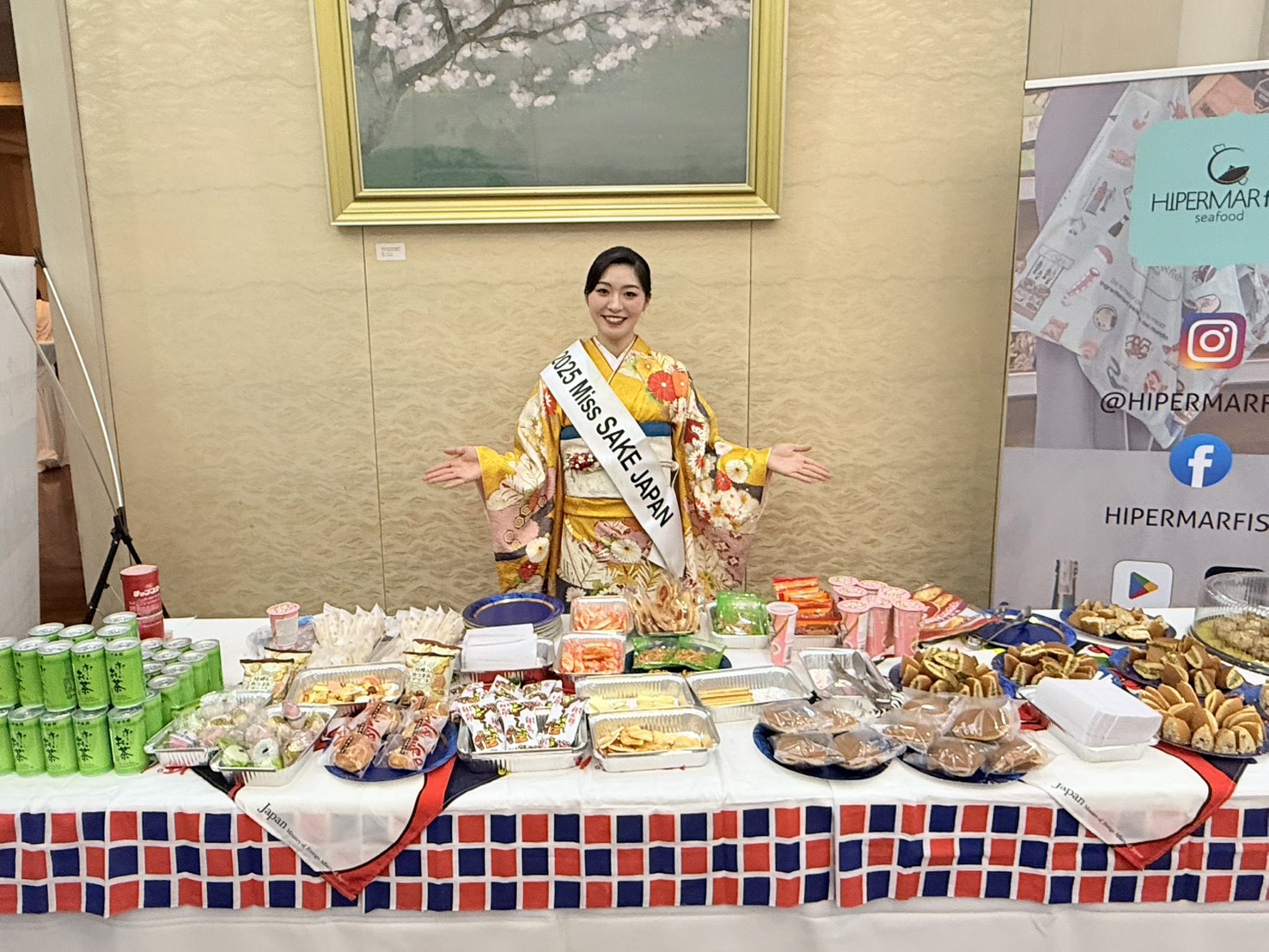
While speaking with guests about their preferences and food pairings, we recommended sake selections tailored to each individual. Clean and refreshing styles, fruity expressions, and sweeter types of sake were especially well received, with comments such as, “It has a gentle flavor that seeps into the body,” and “I can’t believe this natural sweetness contains no added sugar.”
Some guests visited the booth multiple times and commented that “Junmai sake pairs especially well with food,” enjoying how the flavors evolved through pairing experiences. Witnessing their enthusiasm and openness toward discovering sake firsthand allowed me to strongly feel the growing interest in Japanese sake within Colombia.
Because sake culture is still relatively new in Colombia, opportunities like this to introduce a diverse range of sake styles hold great significance. It was a meaningful moment that highlighted the future potential for both deeper understanding and expanded appreciation of Japanese sake in the region.


Recognition of Japanese Cuisine Goodwill Ambassadors
Toward the end of the reception, an award ceremony was held honoring Mr. Koji Ogawa (Executive Officer of Encounter Japan Co., Ltd. and President of its Colombia branch) and Ms. Chieko Imoto (Representative of TERRA MAARU), who became the first individuals in Colombia to be appointed as “Japanese Cuisine Goodwill Ambassadors.” I was also deeply honored to present the appointment badge to Mr. Ogawa during the ceremony.
The titles of “Japanese Cuisine Special Goodwill Ambassador ” and “Japanese Cuisine Goodwill Ambassador ” were established to promote the charm of Japanese agricultural products, food, and culinary culture both domestically and internationally, while contributing to the expansion of exports. Japanese Cuisine Special Goodwill Ambassadors primarily serve as symbolic figures for promotion, while Japanese Cuisine Goodwill Ambassadors provide professional advice and support to local stakeholders based on their expertise.
As of December 2025, only 225 individuals worldwide (171 overseas and 54 within Japan) across 70 countries and regions have received these appointments, making them extremely distinguished roles. This recognition represents an important effort to promote Japanese food culture globally and is expected to further strengthen international cultural outreach in the future.


Through this “Japanese Food & Sake PR Reception” held at the Embassy of Japan in Colombia, I once again realized that Japanese sake is far more than simply a beverage for enjoyment—it is a cultural expression that reflects Japan’s climate, history, and the lives of its people. Seeing the sincere interest and curiosity that local guests showed toward both the flavors and cultural background of sake made me strongly feel that sake possesses the power to connect people across national and cultural boundaries. This reception also demonstrated the potential for creating new value through food and agriculture, built upon the long-standing friendship between Japan and Colombia. I firmly believe that the synergy created through the exchange of culture and industry between the two countries will continue to expand even further in the years ahead.
As Miss SAKE, I will continue cherishing each connection while carefully and authentically communicating the charm of Japanese sake and sharing the depth of Japanese culture with the world. I also hope that the new conversations and exchanges born through sake will contribute to even deeper ties between Japan and Colombia as I continue my activities moving forward.
Chisato Tateno
2025 Miss SAKE Japan