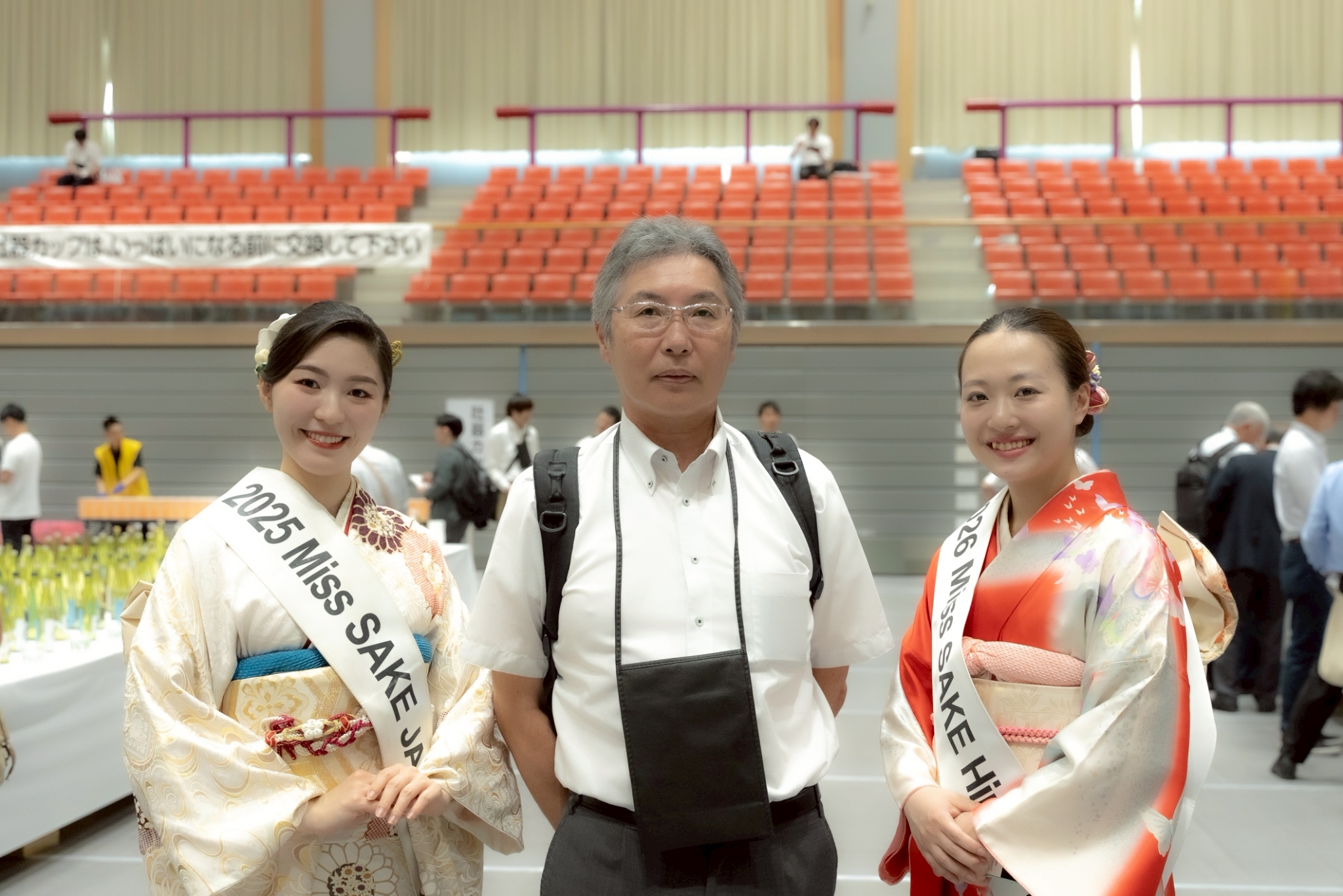
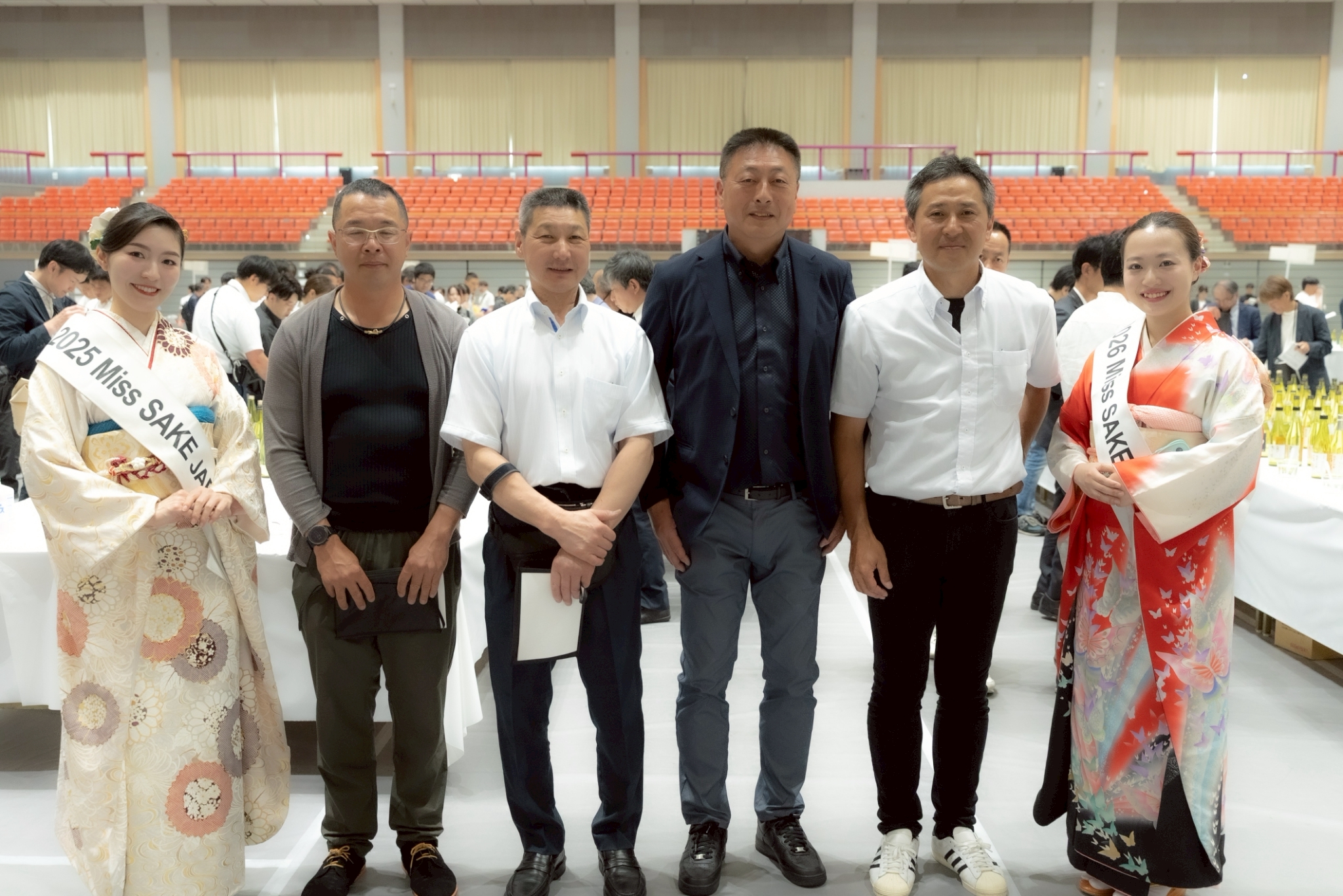
Hello everyone, this is Chisato Tateno, 2025 Miss SAKE Japan.
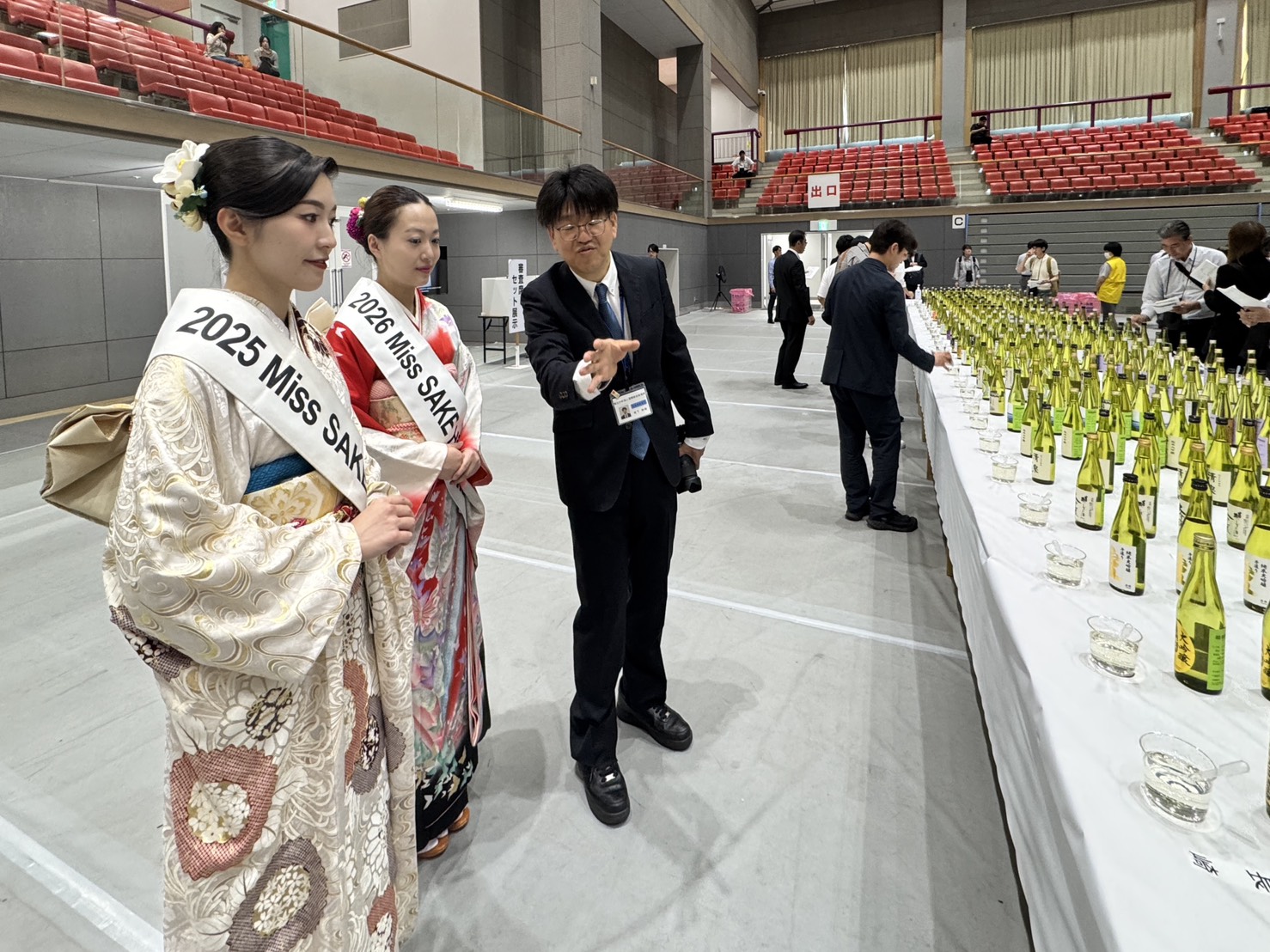
On May 27, I had the special opportunity to visit and observe the FY2025 Annual Japan Sake Awards Technical Research Meeting, held at Higashihiroshima Sports Park in Higashihiroshima City, Hiroshima Prefecture, together with Sachika Oshita, 2026 Miss SAKE Hiroshima. We were also accompanied by Ms. Mika Onishi, Representative Director of the Miss SAKE Association.
About the Annual Japan Sake Awards
Established in 1911, the Annual Japan Sake Awards is one of the most prestigious and historically significant sake competitions in Japan, boasting a history of more than 100 years. It is jointly organized each year by the National Research Institute of Brewing (NRIB) and the Japan Sake and Shochu Makers Association. The competition aims to evaluate and study newly brewed sake submitted by breweries from across Japan, thereby identifying current trends in brewing technology and sake quality while contributing to improvements across the entire industry. Submitted sake undergoes rigorous preliminary and final evaluations, with the finest entries receiving the coveted Gold Prize Award. For breweries, it represents an important opportunity to have the results of their year-long dedication and craftsmanship assessed on a national stage.
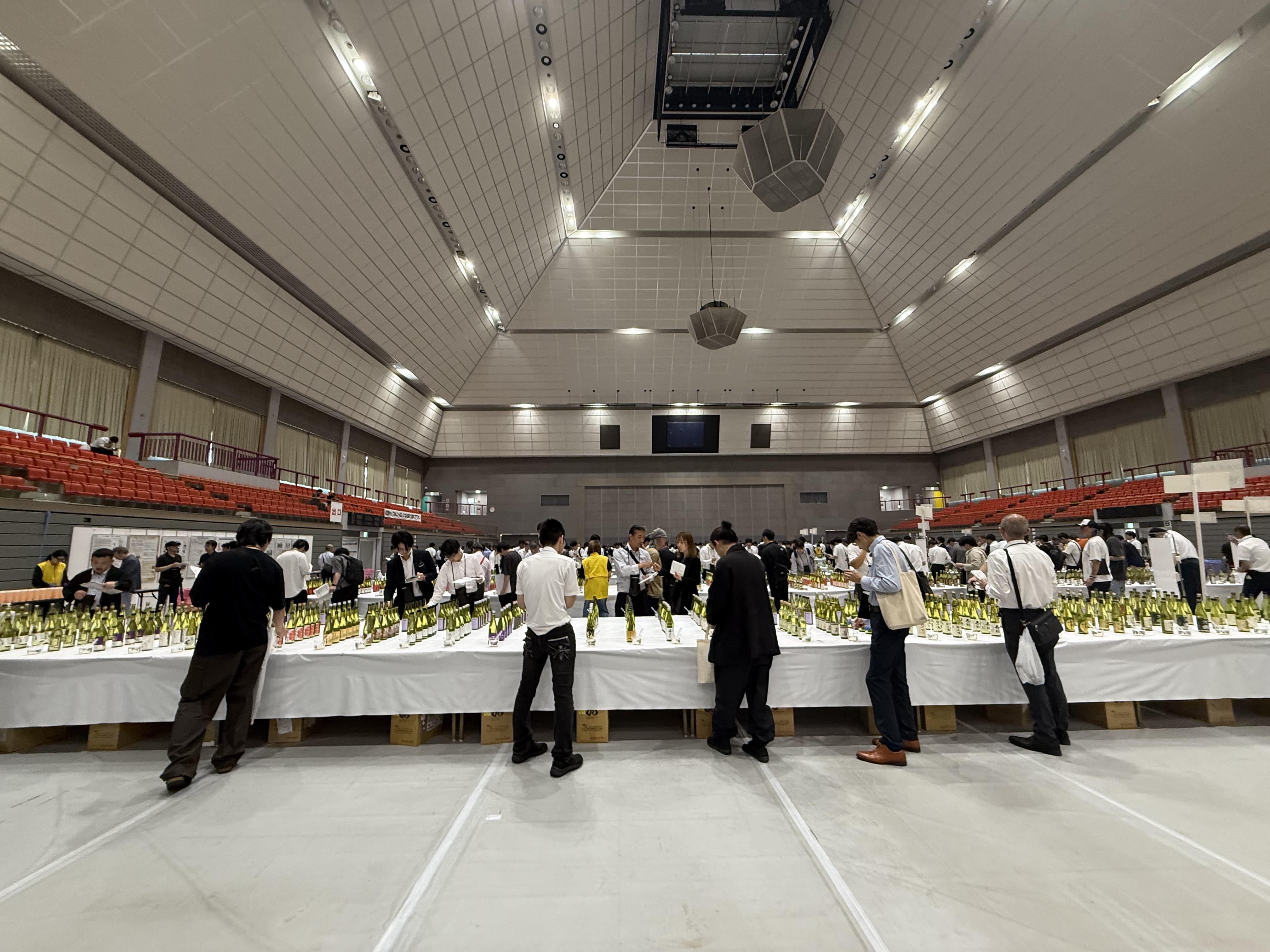
The Technical Research Meeting, held in conjunction with the competition, is a specialized event designed for professionals involved in sake production. All submitted entries are displayed, attracting brewery representatives, prefectural research institutes, sake-related organizations, distributors, and members of the media—many of the individuals who support and advance the Japanese sake industry. This year, approximately 1,000 professionals attended over the course of two days.
As a venue where brewing techniques and sake quality from across the country can be compared and studied, the event provides an invaluable opportunity for breweries to learn from one another, inspire one another, and strive toward even higher standards. For many years, it has served as an important platform for research, exchange, and innovation within the sake industry.

Evaluating Sake Through the Five Senses
Each year, breweries from throughout Japan submit what they consider their finest new sake to the competition, where it undergoes a rigorous evaluation process. In addition to sensory evaluation conducted by expert judges—who assess aroma, flavor, balance, and overall character using their senses—scientific analyses are also performed to measure factors such as acidity and aromatic compounds. By combining human sensory perception with objective scientific data, the competition contributes to ongoing improvements in both brewing techniques and sake quality.
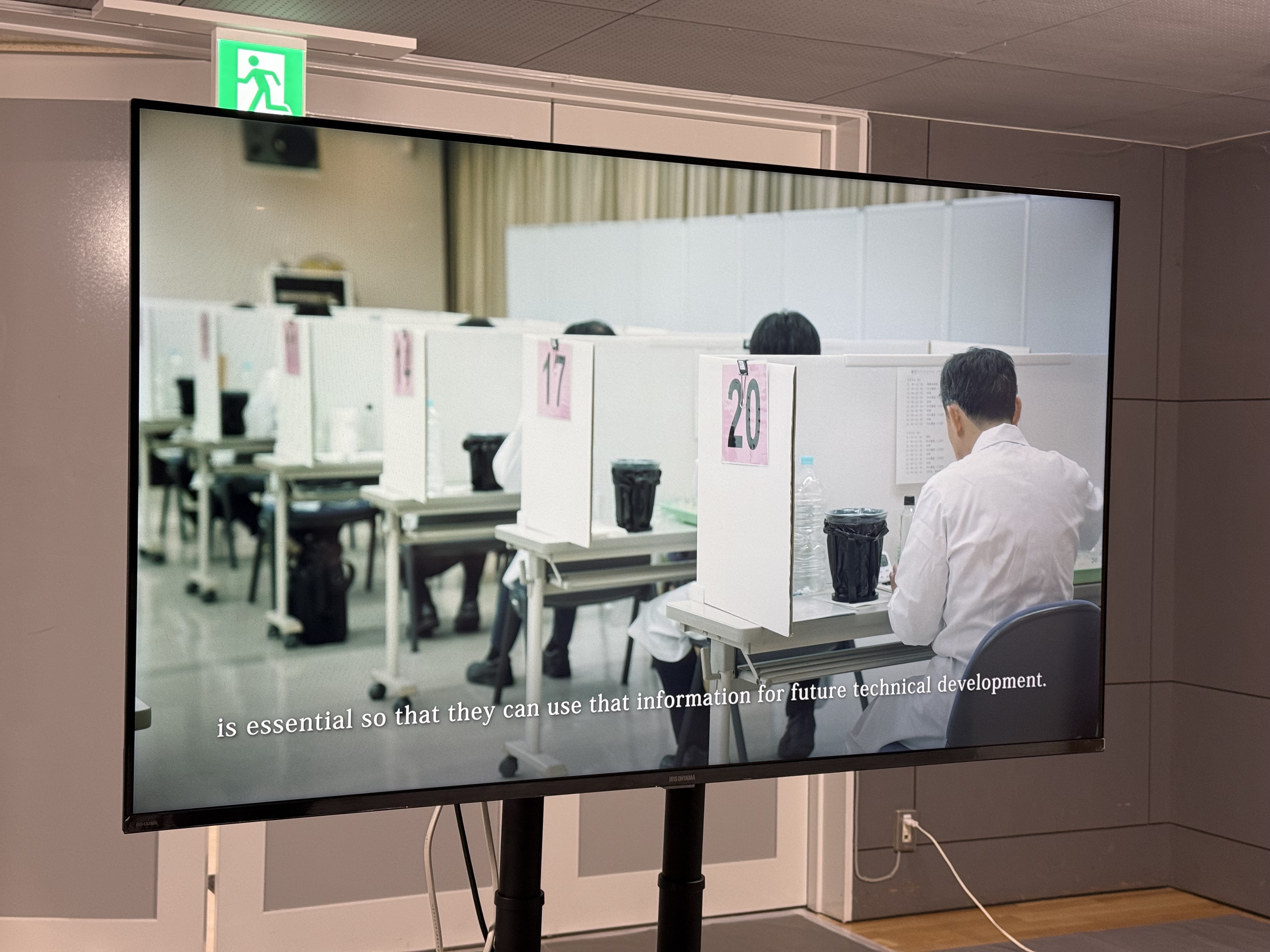
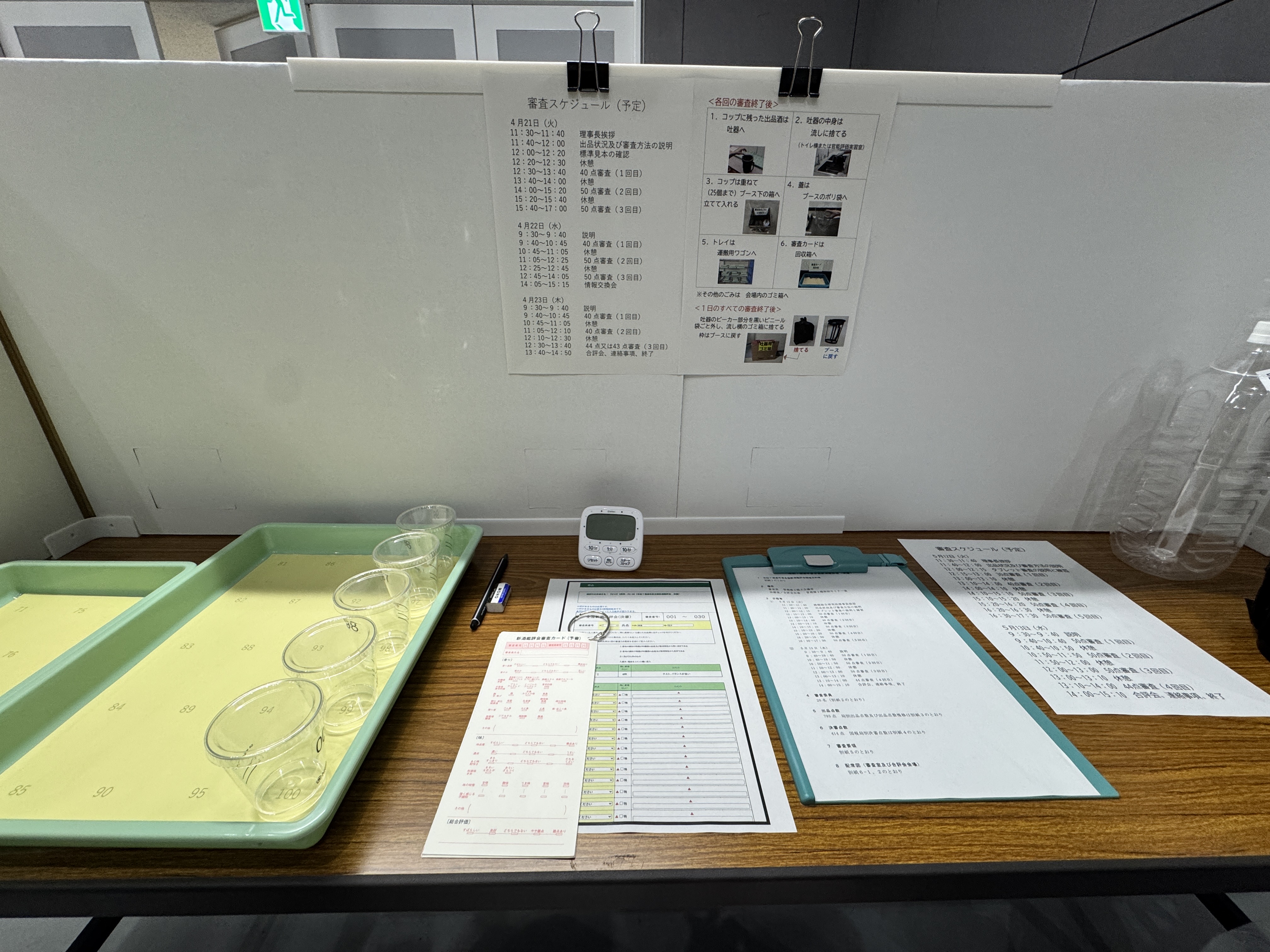
At the heart of the judging process is the sensory evaluation. Using specially designed tasting cups known as NRIB Cups, judges evaluate each entry in only three minutes. During a single session, they assess approximately 40 to 50 samples, repeating the process three times per day over three consecutive days. Learning about the extraordinary concentration and sensory precision required for this task left a profound impression on me.
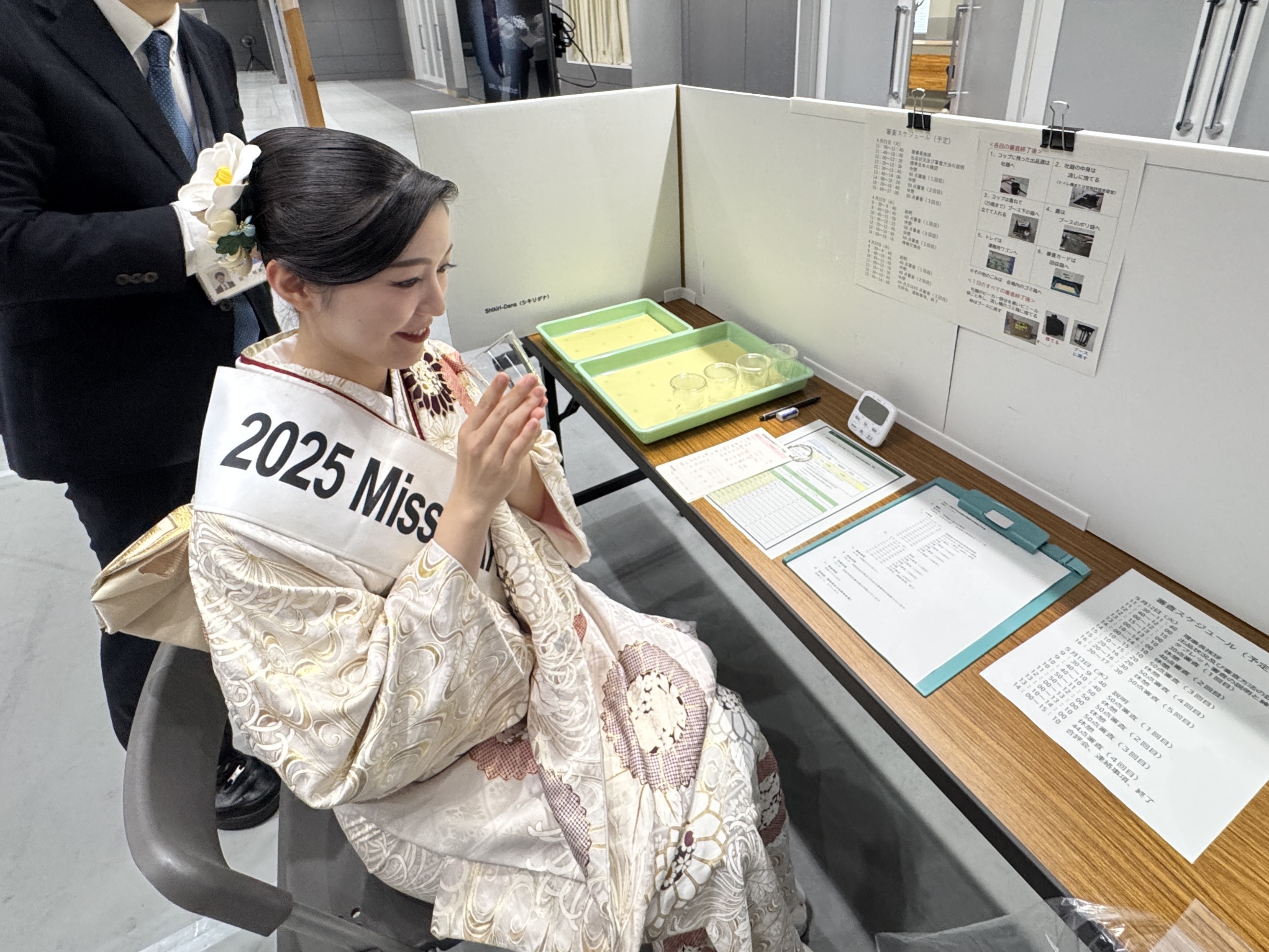
On this occasion, I was also able to experience a special judging-seat demonstration booth. Sitting in an actual judging station, I observed how partitions were carefully arranged to minimize distractions and how only essential tools were placed within reach. The simplicity and functionality of the environment reflected the organizers’ commitment to ensuring both fairness and accuracy in the evaluation process. I was also surprised to learn that approximately 20,000 tasting cups are used during a single competition. In recent years, efforts have been introduced to recycle these materials and reduce environmental impact, demonstrating a commitment not only to quality but also to sustainability.
In an age when many aspects of production can be quantified through technology and data, this experience reminded me of the enduring importance of human sensory perception in evaluating sake. It was a valuable opportunity to witness the expertise, dedication, and carefully designed environment that support the continued pursuit of excellence in Japanese sake.
The Pursuit of Excellence by Japan’s Breweries
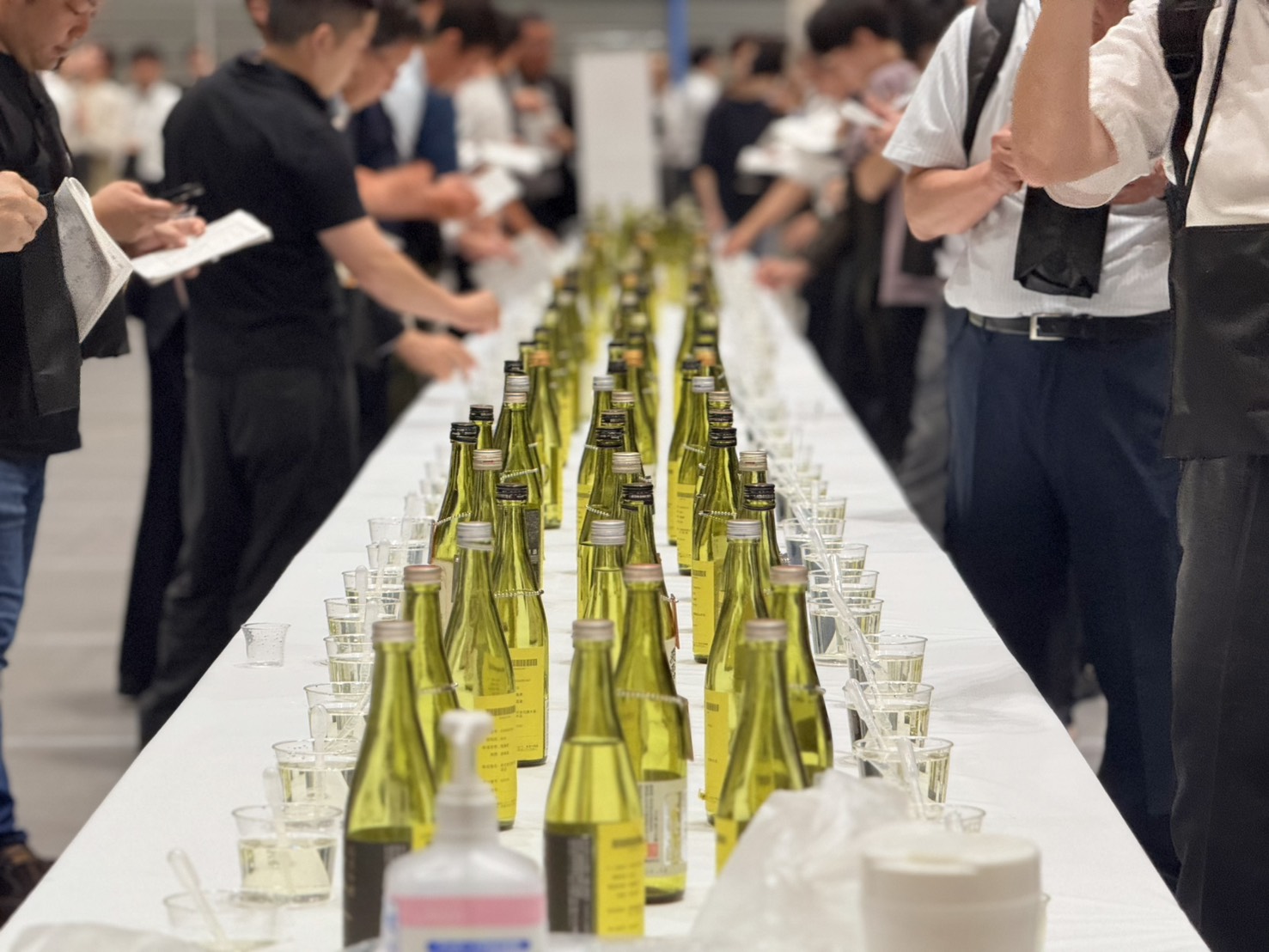
Upon entering the venue, I was greeted by rows upon rows of sake bottles from every corner of Japan. The sight conveyed the tremendous effort, dedication, and passion that breweries invest in their craft. This year, a total of 793 entries were displayed. Among them, 411 sake received awards, and 217 were recognized with Gold Prizes, marked by distinguished signs identifying their achievements. Seeing the culmination of a year’s worth of hard work and technical refinement gathered in one place was truly remarkable.
Throughout the venue, brewery owners, master brewers (toji), and researchers carefully tasted and evaluated sake with great focus. It quickly became clear that this was not simply a venue for sampling award-winning sake. Rather, it functioned as a place of learning, where breweries could compare techniques, study one another’s work, and reflect on their own brewing practices. Conversations and exchanges of ideas could be seen throughout the hall, demonstrating a shared commitment to improving sake quality. Observing these interactions allowed me to appreciate how breweries across Japan continue to learn from one another while pursuing their own unique visions of sake.
It is through this ongoing process of study, refinement, and innovation that distinctive regional and brewery-specific expressions emerge. While honoring tradition, brewers continue to seek new ways to create better sake, and witnessing that spirit firsthand reminded me that sake is not merely a traditional beverage—it is a living culture that continues to evolve.