Hello everyone, this is Chisato Tateno, 2025 Miss SAKE Japan.
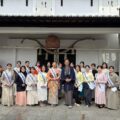
On December 6–7, I had the honor of participating in the 27th International Rice Taste Evaluation Competition in Tsukubamirai, held at the Japan Sports Promotion Park Mirai in Tsukubamirai City, Ibaraki Prefecture, together with Watano Inoue (2024 Miss SAKE Ibaraki), Kana Hazuma (2025 Miss SAKE Runner-up), and Riko Matsuguchi (2025 Miss SAKE Fukuoka).
About the “International Rice Taste Evaluation Competition”
Organized by the Rice Taste Appraiser Association, the International Rice Taste Evaluation Competition is the world’s largest contest dedicated to evaluating the quality of rice. The competition began as a new initiative focused on flavor at a time when regional communities, agriculture, and rice cultivation were facing concerns of decline in the early 2000s. What started with fewer than 400 entries has now grown to nearly 5,000 samples.
In the first screening, entries undergo analysis using taste evaluation machines and grain discriminators, followed by a second screening with polished rice measured using taste meters. Rice samples selected as finalists are then evaluated through sensory examinations conducted by certified rice appraisers, culinary experts, distribution professionals, and other specialists.
Since becoming an international competition in its tenth year, entries from overseas have also been welcomed, and award-winning rice has earned high recognition both domestically and abroad. The competition features a wide range of categories—including the International Overall Division, Regional Championships, Large-Scale Agricultural Corporations (20ha/50ha), Cultivation Method Divisions, the National Agricultural High School Rice Koshien, and the Elementary School Division. It provides a platform where producers, young future farmers, and industry members can learn from one another and refine their techniques and aspirations. Beyond a competition of quality, this contest plays a significant role in supporting producers’ efforts, strengthening regional branding, and contributing to the revitalization of rural communities.


Visiting the Heart of Japan’s Rice Culture
On the first day, after welcoming guests and VIPs at the entrance, we toured the outdoor booth area. Both days offered perfectly clear skies, with crisp winter air and an occasional cold breeze as we greeted exhibitors.
At the Ibaraki Local Sake Bar booth, we assisted in introducing renowned Ibaraki sake to visitors. A “30ml for 100 yen” tasting corner—recreated exactly as it appears inside the store at JR Mito Station—allowed us to help each guest discover sake suited to their tastes. Within this lively space, I felt deeply moved by how rice culture and sake culture have grown together over centuries as part of daily life in Ibaraki.


We also visited booths of agricultural manufacturers who continue to support rice farming. We expressed our appreciation to Kubota, with whom Miss SAKE works during agricultural training experiences, and I was grateful for the opportunity to ride a tractor at the Iseki booth. Conversations with experts involved not only in machinery but also fertilizers, pest control technologies, and research and development reminded me of the immense expertise and effort behind every single grain of rice that reaches our tables. Walking through the booths, I could truly sense how producers, engineers, and local communities work together to sustain and pass on Japan’s rice culture to the next generation.


A Moving Evening — Sharing in the Heart of the Producers
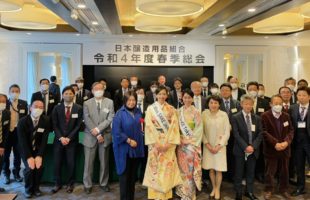
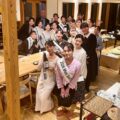
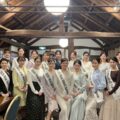
On the evening of the first day, a welcoming reception was held at Hotel Grand Shinonome in Tsukuba City. We Miss SAKE were invited on stage for the ceremonial kagami-biraki to open the celebration. Throughout the reception, we served sake from 35 breweries across Ibaraki, as well as selections from other regions, to guests from around Japan. Many rice producers were in attendance, and I was able to hear directly about their passion for rice cultivation and the tension they felt ahead of the awards ceremony. I was truly grateful for the heartfelt conversations that unfolded through the unifying presence of Japanese sake.
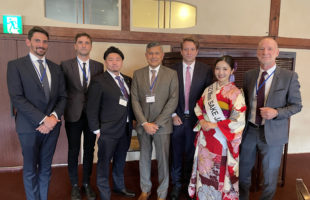
I also had the privilege of greeting Mr. Koji Urazato, Chairman of the Ibaraki Prefectural Sake Brewers Association, who have long supported local sake brewing. And Mr. Masayuki Kobayashi, President of Yuki Hotaka Co., Ltd., who has received consecutive Gold Awards at this competition for many years.
Toward the end of the reception, the winners of the prestigious International Overall Division Gold Award—granted only to rice with exceptionally high comprehensive taste scores—were announced directly by Association President Mr. Hideyuki Suzuki. Seeing producers embrace one another through tears of joy as their names were called filled the room with emotion. In their expressions, I felt the tremendous devotion that defines their work and the years of perseverance behind each harvest. It was an unforgettable moment that left a profound impression on me.


Beyond a Single Grain
On the second day, I was honored to serve as a judge. I evaluated 46 rice samples nominated for the National Agricultural High School Rice Koshien 2025, the Large-Scale Agricultural Corporation Division, and the Cultivation Method Division. Each sample—already having passed preliminary screenings—stood out for its excellence. As I carefully assessed appearance, aroma, taste, stickiness, and texture, I found myself recalling the faces of the producers I had met the day before. Although the judging time was limited, I approached each sample with sincerity and focus.
Before the judging began, we were given a special opportunity to observe the rice cooking room. There, staff members operated their designated rice cookers with precision, following instructions received through earpieces. Witnessing their dedication within the room’s focused atmosphere deepened my appreciation for those who work behind the scenes to ensure fair and accurate evaluation.


An Afternoon Filled with Applause and Achievement
In the afternoon, the long-awaited awards ceremony was held. The program began with a handover ceremony led by representatives from Iwase District in Sukagawa City, Fukushima Prefecture—host of next year’s 28th competition. Mayor Masaaki Odera, who will serve as the next Executive Committee Chair, delivered remarks expressing heartfelt gratitude and strong commitment toward the upcoming event. His message resonated deeply with the audience. The ceremonial handover of the competition flag, followed by the iconic “rice ball hat” presentation, brought warm smiles across the venue as the symbolic baton for the next competition was passed on.
Throughout the awards ceremony, certificates, shields, trophies, and commemorative flags were presented to winners by Mayor Hiroshi Odagawa of Tsukubamirai City and Association President Mr. Suzuki. As Miss SAKE, we supported the proceedings as attendants and witnessed up close the joy, relief, and emotion on the faces of the honorees. Each round of applause filled the hall with shared pride, and each tear reflected countless days of effort.
To all award recipients and nominees, I extend my sincerest congratulations.


Through these two days at the 27th International Rice Taste Evaluation Competition in Tsukubamirai, I gained a renewed appreciation for the tremendous dedication invested in growing rice—Japan’s essential cultural cornerstone. Every grain carries the stories, challenges, and aspirations of the producers who cultivate it. Witnessing those stories converge and shine on this prestigious stage moved me deeply.
As Miss SAKE, I am committed to further understanding not only Japan’s sake culture but also the rice cultivation and agricultural heritage from which it flows. I hope to continue sharing the beauty of Japanese food culture—together with breweries, producers, and local communities—and help ensure that the story of each grain is carried into the future.
Chisato Tateno
Miss SAKE Japan 2025